Grand Haven among first U.S. cities to implement Zimbabwean program training residents to provide basic talk therapy
The Grand Haven-based Momentum Center’s Friendship Bench program will train volunteers to provide basic mental health support in public places.
This article is part of State of Health, a series about how Michigan communities are rising to address health challenges. It is made possible with funding from the Michigan Health Endowment Fund.
When Barbara Lee saw Zimbabwean psychiatrist Dixon Chibanda’s TED Talk, explaining how he’d trained ordinary citizens to provide basic talk therapy, she says her first thought was that the idea made “all the sense in the world” for her own community.
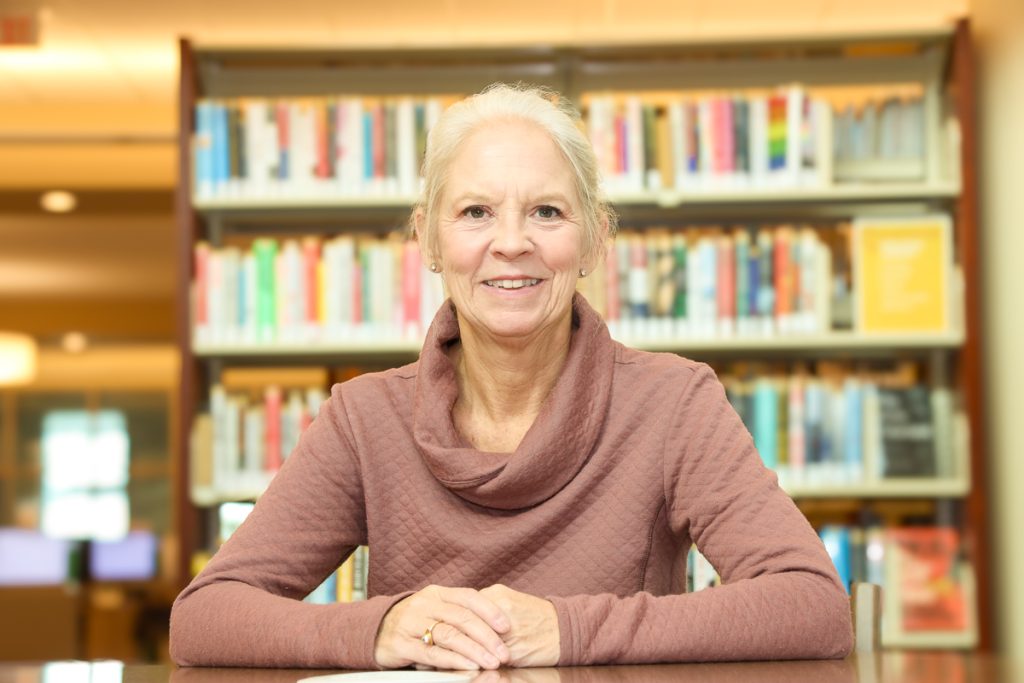
Lee is the “experi-mentor” and leader of the Grand Haven-based nonprofit Momentum Center, which offers a variety of services and activities related to mental health, wellbeing, and disability. She saw Chibanda’s effort, called the Friendship Bench program, as an extension of the work her organization was already doing.
“We want to make sure that everybody knows that they can have a nonjudgmental listening ear,” she says.
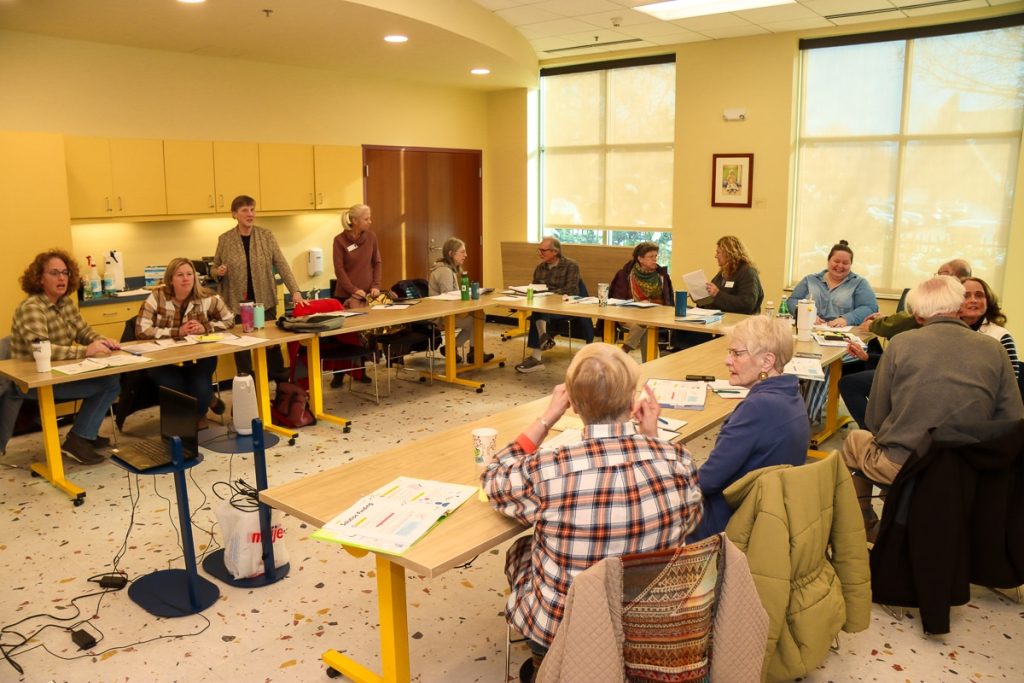
Over the past year, Lee has been in the process of launching a Friendship Bench program to serve the Tri-Cities of Grand Haven, Ferrysburg, and Spring Lake, and eventually all of Ottawa County. Thirteen volunteers are currently in training to be “community listeners” for the program, which is set to launch in several community sites in late May or June.
Lee says a local Friendship Bench program felt particularly important to her because her adult son died by suicide and she recognized the isolation he felt before his death.
“My question for our organization is always, … ‘How do we reach people like my son?'” she says. “Whenever we talk about the Friendship Bench, we’re also saying, ‘Where do we need to be? Where are the populations that are isolated? How do we reach them?'”
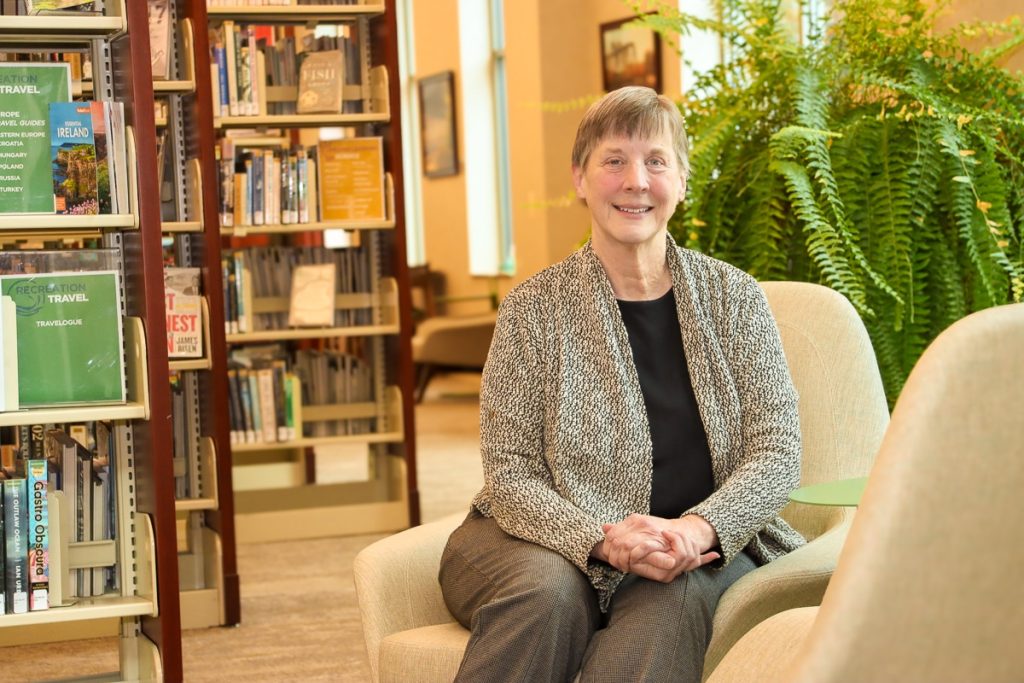
Tri-Cities Women Who Care provided initial seed funding for the idea, and grants from the Michigan Health Endowment Fund and the Grand Haven Area Community Foundation allowed the Momentum Center to hire a new staffer, Kate Maver, as its Friendship Bench coordinator. Maver says her past experience as a chaplain showed her the importance of listening and being present with people who are experiencing challenges.
“You can really see the difference that you can make,” she says. “And I’ve had people come back to me years later saying that that did make a difference in whatever the intervention might’ve been. And that’s not just me. It’s anybody who’s been in that kind of a listening situation in a health care setting.”
Maver also cites the words of Hunter “Patch” Adams, a doctor, activist, comedian, and subject of the 1992 film “Patch Adams,” with whom she’s worked on many occasions. She says Adams said that “often what we call depression is loneliness.”
“Since COVID, I think that’s gotten just worse and worse and worse,” she says. “… So [the Friendship Bench program is] not therapy, but it is therapeutic. It’s helpful.”
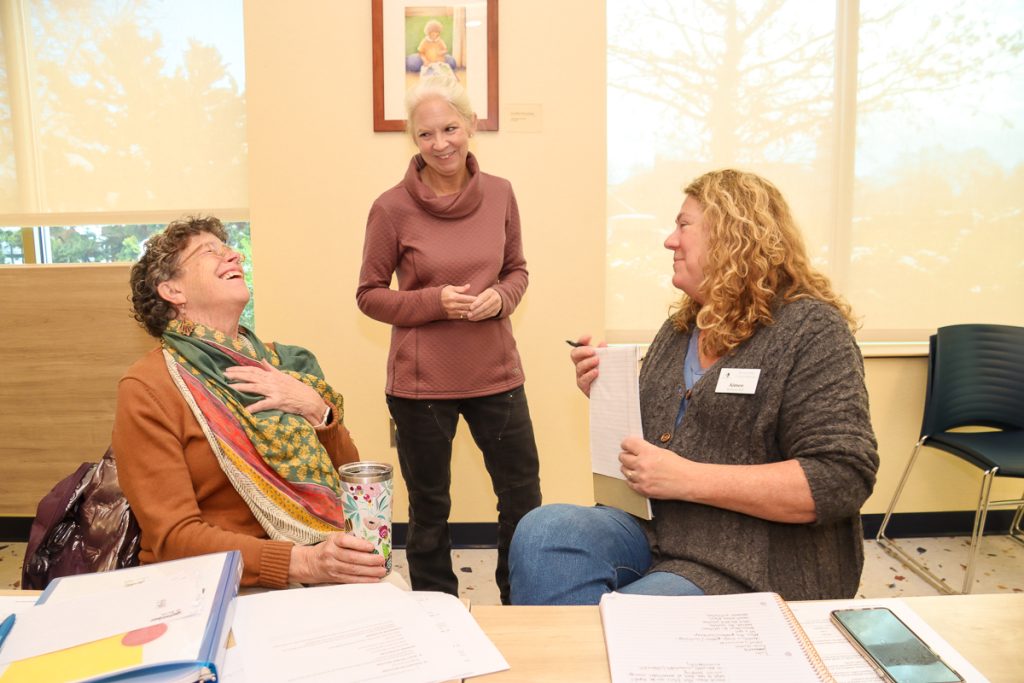
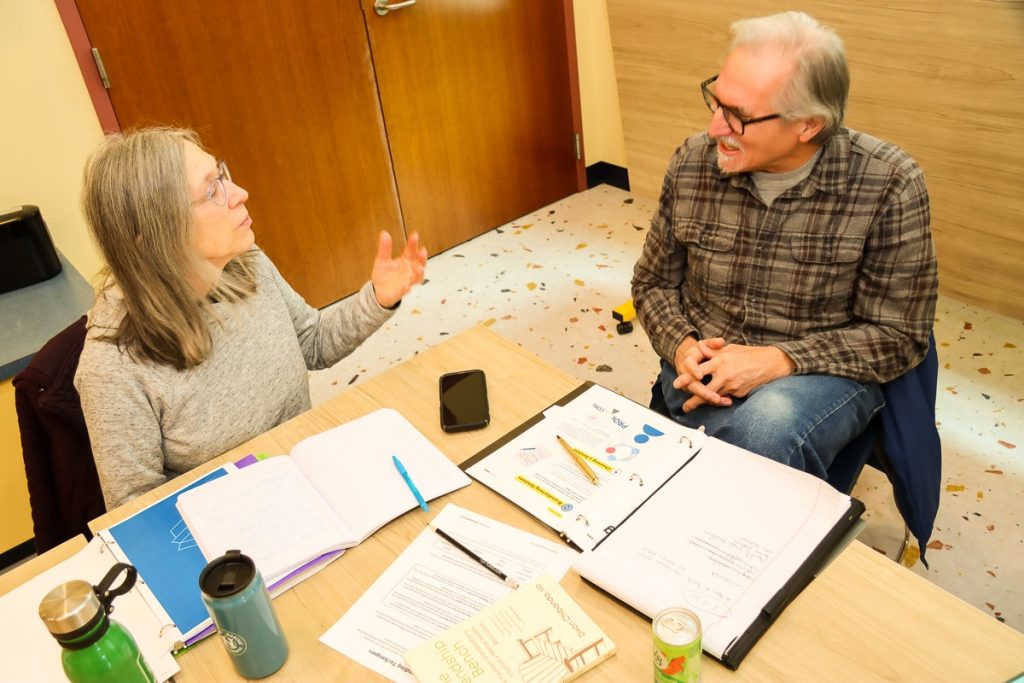
The program’s benches will be “metaphorical,” Lee says. The idea is not to build and place actual benches so much as to establish easily accessible public places where people know they can go at designated times to sit down and talk to a trained volunteer. Maver has been working on identifying those sites, which include Spring Lake District Library, Loutit District Library, St. John’s Episcopal Church, and more to come. Spring Lake District Library Director Maggie McKeithan says she’s excited for the library to host the Friendship Bench program.
“We see a lot of people in a lot of different life situations, and we have to figure out how to help them when they’re in front of us,” she says. “… We know that there are people who come to the library and we might be the only person they talk to today. So having a Friendship Bench that can provide the mental health assistance, or just to combat loneliness, could be huge for our patrons.”
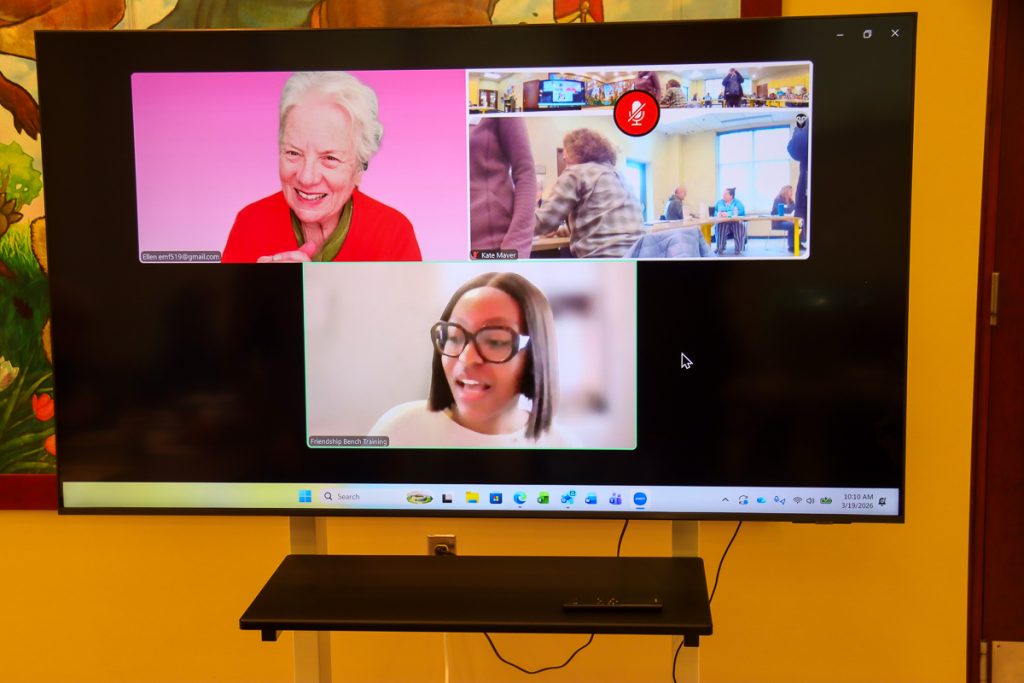
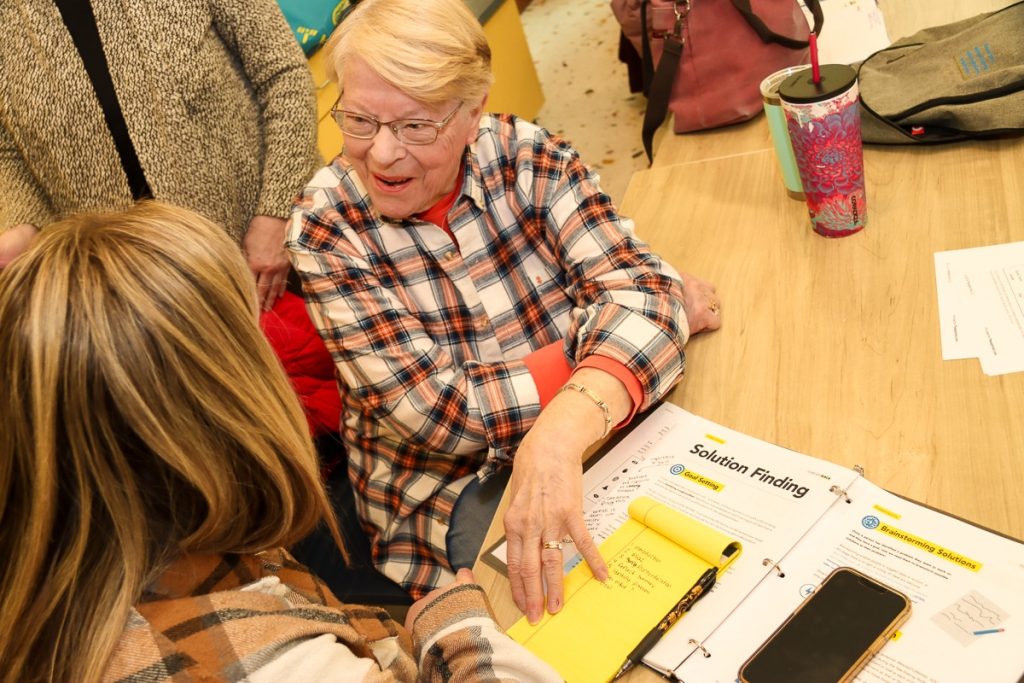
Two of McKeithan’s staff are currently participating in the 27-hour Friendship Bench volunteer training, which began in March and will wrap up in May. The training, which is led by Chibanda’s Zimbabwean team, includes both a classroom portion and a practicum in which trainees will roleplay being community listeners. Lee says there will also be ongoing “conversation and processing and opportunities for learning and growth and development” for volunteers even after the training ends.
While Chibanda’s original Friendship Bench program specifically engaged grandmothers as listeners, Lee and Maver have sought listeners of diverse genders, ages, and life experiences. Lee says that’s to ensure that as many people as possible feel comfortable talking to a listener. She expresses particular concern about young men’s mental health and comfort level seeking help, which led her to ensure there were several male listeners in the group. Lee also wants to do dedicated outreach to the community’s Latino and Laotian populations as the program grows.
Lee and Maver emphasize that the program is not a substitute for help from a mental health professional, and that listeners will be trained to direct people to a professional if needed. But they anticipate that listeners will be helpful in many less acute situations.
“The people sitting on the benches are not the problem-solvers,” Lee says. “Their goal and task is to help empower the person they’re talking to to recognize their own answers and their own solutions. But sometimes it takes saying it out loud in order to come up with those thoughts and ideas, so we provide for that.”
As the Tri-Cities Friendship Bench program prepares to launch drop-in hours in the coming months, Lee says she’s excited for the Tri-Cities to be among the first U.S. communities to join the global network of Friendship Bench programs.
“I’m thrilled to be at the front of this wave,” she says.
Maver echoes that sentiment, noting that Chibanda has been in countries ranging from Germany to Japan when she’s talked with him.
“There are people all over the world that are catching on to this,” she says. “And I think it was really COVID that kind of pushed people over the edge to realize not only in this country, but in all countries, that it’s been hard for us to get back on the saddle with community as we move forward in life. So this is one way to help that happen.”
Related Articles
Mental health crisis care without an ER wait
Mental health urgent cares and crisis stabilization units provide immediate access to mental health services.

CMHA: Telling the whole story about Michigan’s public mental health system
The Community Mental Health Association of Michigan gives a voice to the issues and the people experiencing them.
Designer aims to elevate quality of life through accessible housing plans
Disability Advocates and a West Michigan designer create housing plans for safe, independent living.