Accessible Halloween event brings trick-or-treaters and senior residents together indoors
Disability Network Northern Michigan partners with Grand Traverse Pavilions to help people of all ages enjoy an accessible Halloween celebration.
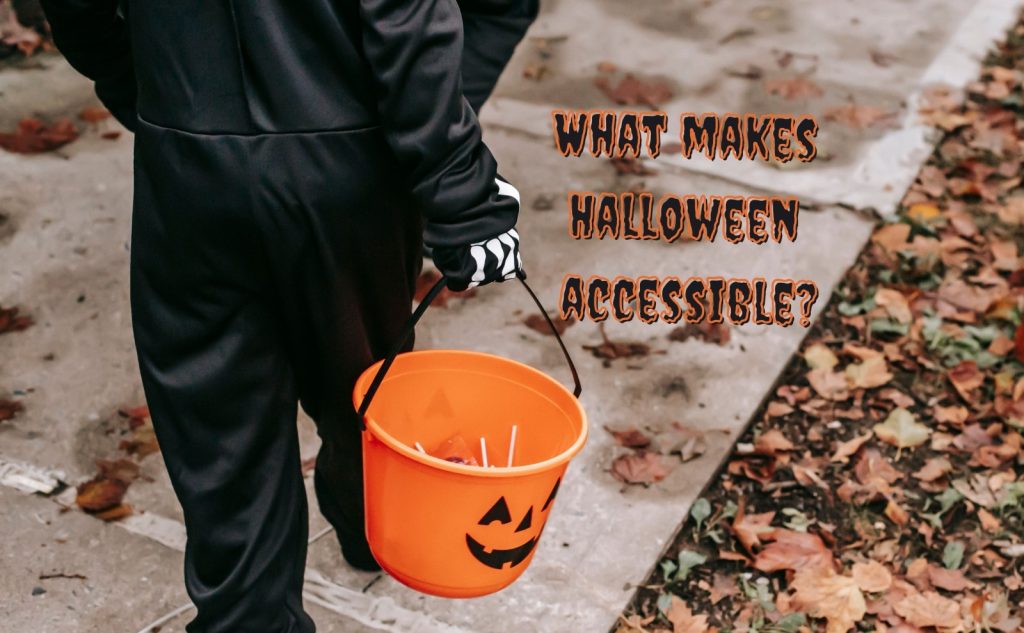
Trick-or-treating is a favorite tradition for many kids. But this fall tradition isn’t always accessible. Porch stairs can keep people who use wheelchairs from reaching the door. Crowds can overwhelm some children, and food allergies can limit which candy others can eat.
Disability Network Northern Michigan is partnering with Grand Traverse Pavilions in Traverse City to create an accessible indoor trick-or-treating event on Oct. 30 from 4:30-6:30 p.m.
Ella Wangeman, an independent living specialist with the network, came up with the idea while thinking about her grandmother’s experience in assisted living.
“I remember when my grandma was in assisted living, and she missed having trick-or-treaters,” Wangeman says.
Grand Traverse Pavilions, a senior residential and assisted care facility offered a place to bring those groups together, giving residents a chance to welcome visitors and trick-or-treaters another way to celebrate.
“The elderly people who are living there get to be a part of the community, and some of the younger kids who want to go trick-or-treating get that accessible space,” Wangeman says.
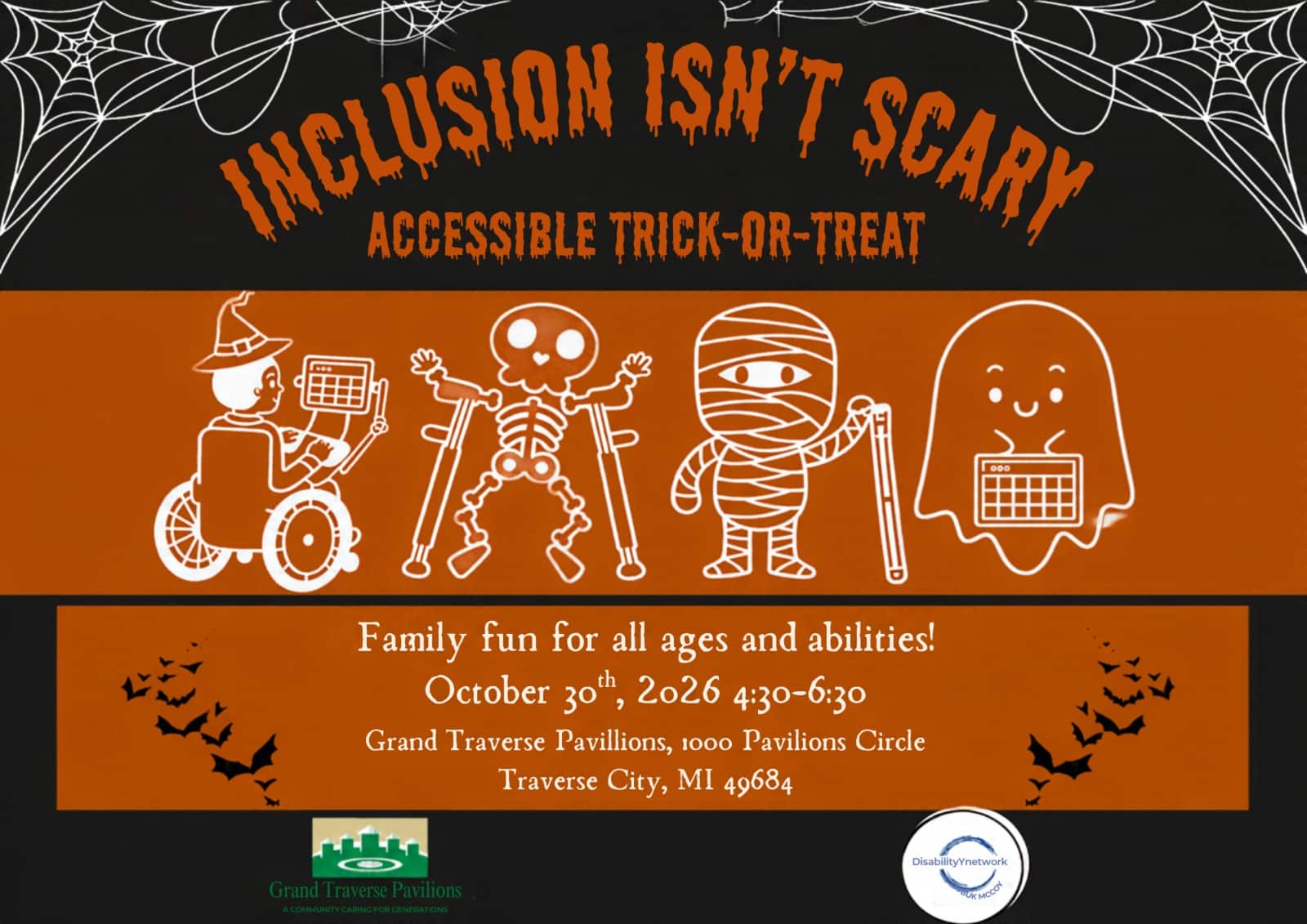
Visitors will move through the hallways to trick-or-treat. Organizers are also planning a room with games, possibly including a Halloween version of pin the tail on the donkey: pin the screw on Frankenstein.
Disability Network Northern Michigan will provide candy and games, while Grand Traverse Pavilions will coordinate residents’ participation. Wangeman says residents can decide whether to dress in costumes.
The event is open to trick-or-treaters of all ages from the entire community. Family members of residents and the facility staff are also invited. People do not need to sign up ahead of time.
“It’s open to all ages, too, and I know a couple of my clients who are adults want to go,” Wangeman says.
Sharing in the fun
Olivia Taylor, 23, who has a peanut allergy that puts many of the most popular Halloween treats off limits, is looking forward to attending the event. She recently shared her Halloween experiences during a Disability Network Northern Michigan gaming group and was invited to attend the Oct. 30 event.
Her experience adds another concern when planning an accessible Halloween event. Getting to the door is one part of taking part. Having a treat someone can enjoy is another.
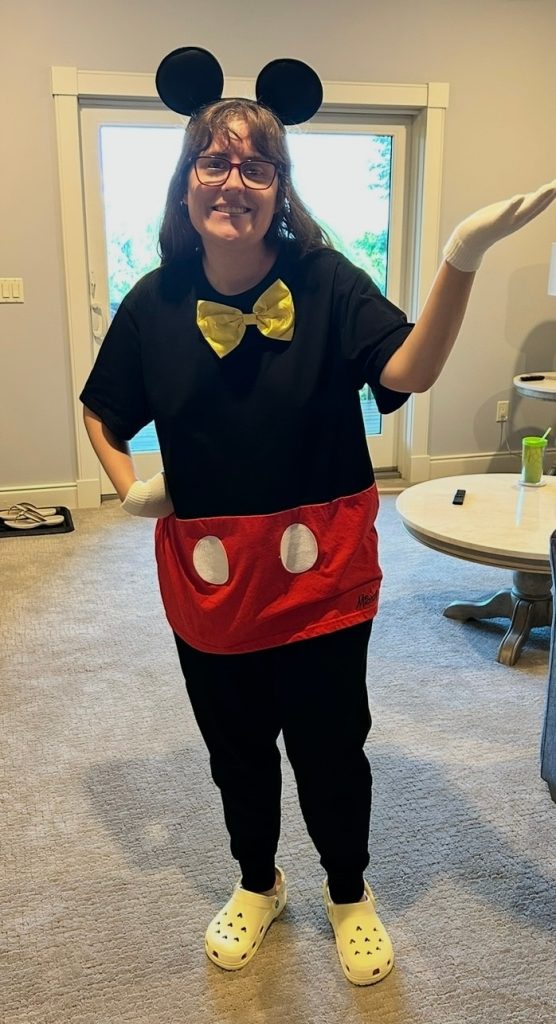
For Taylor, going trick-or-treating as a child often meant coming home with a bag of candy she couldn’t eat – much of it containing peanut butter — leaving her disappointed.
“Usually, my mom or my dad will take the candies that I can’t eat. So we just usually separate all of the candy into separate containers while keeping the peanut ones away from me,” she says.
Taylor suggests keeping candy that contains allergens apart from other choices and helping people find options they can eat.
“I guess maybe just trying to keep all of the candy separate, like the candy that could cause an allergic reaction, or maybe helping those who do have food allergies make sure they don’t accidentally grab a Reese’s or something that could bother them,” she says.
She also thinks about people who cannot eat gluten or dairy and those who need to carry medicine for a serious allergic reaction.
Her mother, Kim Taylor, says the family balances caution with gratitude for neighbors who buy candy and welcome trick-or-treaters. She is reluctant to tell people what they should hand out, knowing that sharing treats is a generous act.
Still, she understands that some families have more to consider when deciding whether and how to take part.
“But I do feel for parents with kids who have more severe allergies,” Kim Taylor says.
The Taylors are from Arizona and spend part of the year in Suttons Bay. This is their second year here, and their search for local activities and support connected them with Disability Network Northern Michigan.
Olivia joined a DNWM workshop with weekly Zoom meetings to learn skills for living on her own. She also joined the gaming group, where she shared how food allergies can make trick-or-treating harder.
Kim Taylor says the organization has helped their family, and the Halloween event gives Olivia another chance to have fun and connect with others in the community.
Removing other barriers
Wangeman’s planning addresses other barriers as well. In downtown Traverse City, she says, older homes can have large staircases leading to their front doors. Neighborhood trick-or-treating also can involve crowds that make it hard for children who become overstimulated.
The indoor event is intended to offer another option that brings more residents into the celebration.
Other organizations offer ways for neighbors to make Halloween more welcoming. The Shirley Ryan AbilityLab, a leading physical rehabilitation hospital in Chicago, recommends handing out treats at the bottom of porch steps or the end of a driveway.
Another recommendation is to put treats on a table instead of inside a deep bowl so children can reach them. The organization also suggests keeping paths clear and avoiding strobe lights.
The Food Allergy Research & Education’s Teal Pumpkin Project, which advocates for children who can’t eat traditional Halloween candy, encourages participating homes to offer nonfood treats in a separate bowl and display a teal pumpkin or sign. It has an online map that can help families find those homes and events before heading out.
Olivia plans to arrive at the Grand Traverse Pavilions event dressed as Super Mario. Despite the extra care she must take with candy, she looks forward to celebrating Halloween with others.
“I guess that it’s a good way to interact with the community, and I’ve just always liked going trick-or-treating and getting free candy and dressing up because I don’t really like the scary part of Halloween. I’ve always enjoyed the fun part,” she says.
The multi-regional Disability Inclusion series is made possible through a partnership with Centers for Independent Living organizations across West Michigan.
Author

Related Articles
People with disabilities deserve dignity, belonging, and ordinary lives, too
In this Shore Story, Muskegon resident Jeffrey VanDyke explores grief, disability, and fighting for our humanity: “We don’t just exist. We belong.”
Adaptive recreation opens West Michigan adventures to people with disabilities
West Michigan recreation groups are removing barriers through adaptive equipment, creative problem-solving, and partnerships that give people more ways to participate.
Alpena builds accessibility roadmap by listening first, improving public spaces for everyone
Alpena’s accessibility assessment helps prioritize affordable improvements, showing small communities how resident input can guide inclusive planning and investment.