How mentorship helps one man build stability despite setbacks
A long-term mentoring relationship shows how accountability, honesty, and persistence can support progress, even as challenges and setbacks continue along the way.
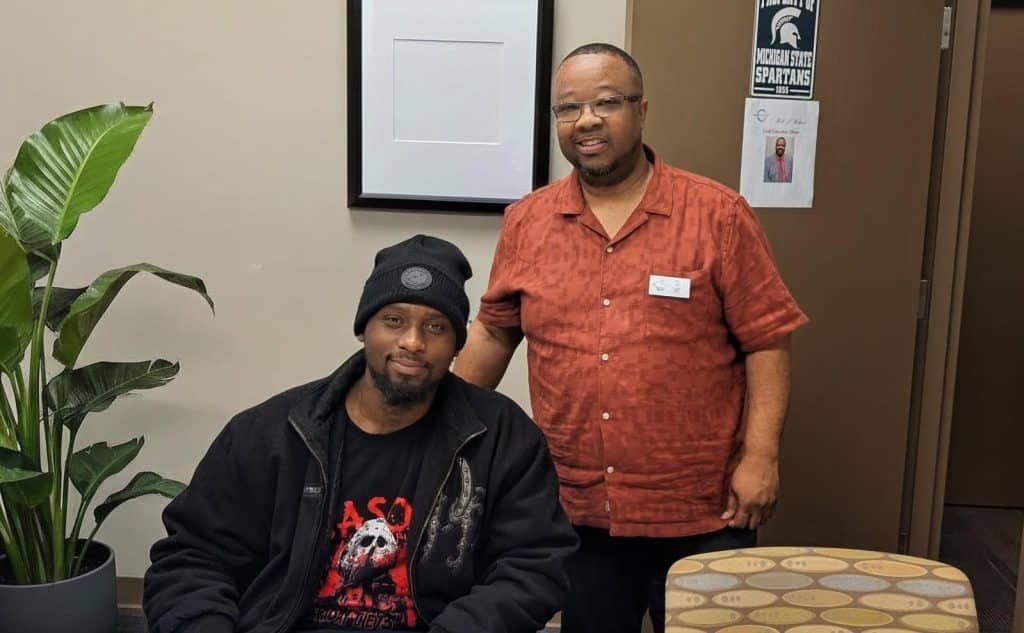
When Will Wilson met Demarkus Tarrio 15 years ago, Tarrio was struggling to find a better life but didn’t know how to move forward.
“I was 18 years old and just trying to find my way,” Tarrio recalls.
At the time, Tarrio had goals of steady work, independence, and stability, but says he wasn’t taking the steps to reach them.
Their connection — through what is now Disability Network West Michigan — would become a long-term mentoring relationship that shows how steady guidance and accountability can help someone build a more stable life, even amid setbacks and external challenges.
When he connected with the organization in 2011 through a vocational referral, Tarrio says he had a learning disability and was looking for help building basic job skills.
Wilson, then a staff member, says he immediately saw potential.
“I saw positive in him. I didn’t see a negative young man,” Wilson says.
Building a life
According to a 2011 Disability Connection/West Michigan newsletter story, staff described Tarrio as personable and engaged, with a “firm, confident handshake,” direct eye contact, and an easy smile. He quickly began working on interview skills, communication, and workplace expectations.
“I learned it’s all about business. … You’ve got to have the right attitude,” Tarrio said in the newsletter story. “You’ve got to work on you as a person.”
The story captured the beginning of Tarrio’s relationship with Wilson and the organization.
With coaching from Wilson and others, Tarrio landed his first job. It was a temporary assignment that was only supposed to last one day. It turned into two and a half months.
He said his grandmother, who raised him, was proud.
“She always said she knew I had it in me,” Tarrio says.
Wilson says that early success reflected something important.
“He has the right attitude. He’s driven, and he’s receptive to criticism,” Wilson says.
At the time, that progress marked a breakthrough. But it was only the beginning. The years that followed were not a straight line.
“It’s been a little roller coaster ride,” Tarrio says.
Wilson says mentorship by itself cannot solve everything.
“There’s no quick fix,” he says. “It’s about consistency over time.”
Making better choices
Still, both say they stayed connected. Wilson kept talking about being responsible and honest. Tarrio says those lessons started to stick.
“He always told me to be consistent and be a man of your word,” Tarrio says.
Being honest became a big part of their meetings. Tarrio says he spoke openly about his struggles, including marijuana use. That helped Wilson give clear, helpful advice.
“He wasn’t judgmental. He made me feel comfortable talking to him,” Tarrio says.
Over time, Wilson says, their relationship changed.
“It became more like a big brother, little brother relationship,” he says.
Tarrio, now 33, says he has been employed for four years at Tyson Foods, is married and is raising three children.
“I ended up making it through. I ended up changing my life,” he says.
He describes learning to reflect on mistakes rather than repeat them.
“I try not to make the same mistakes twice,” he says.
Wilson says that growth reflects the long-term goal of mentorship — progress over time.
“The biggest thing was consistency,” he says.
The correct mindset
The difference between 2011 and now is not just employment or stability, both say, but mindset. Tarrio says he once needed guidance to understand workplace expectations and daily structure. Now, he says, he applies those lessons on his own and shares them with his children.
“I always say, be honest and look people in the eye,” he says.
Mentorship programs like those at Disability Network West Michigan aim to help people navigate employment and independence, particularly those with disabilities. Tarrio, who says he has a learning disability, says having someone break down expectations and model behavior made a difference.
“He helped me prepare for life, the real world,” Tarrio says.
Results, Wilson says, depend on more than mentorship alone.
Progress takes time, personal effort, and access to opportunities. Tarrio’s story includes setbacks that mentorship did not prevent, even as it helped him recover.
Once a young man who had goals but struggled to act on them, he now says he understands not just what he wants, but how to pursue it.
Wilson says that transformation is what keeps him committed to the work.
“When someone can take what they’ve learned and build a life, that’s what it’s about,” he says.
Photo courtesy of Will Wilson
The multi-regional Disability Inclusion series is made possible through a partnership with Centers for Independent Living organizations across West Michigan.
Author

Related Articles
Adaptive recreation opens West Michigan adventures to people with disabilities
West Michigan recreation groups are removing barriers through adaptive equipment, creative problem-solving, and partnerships that give people more ways to participate.

Alpena builds accessibility roadmap by listening first, improving public spaces for everyone
Alpena’s accessibility assessment helps prioritize affordable improvements, showing small communities how resident input can guide inclusive planning and investment.
July ADA Celebration brings advocacy, resources, inclusion to Muskegon County communities
The free July 21 event celebrating the ADA’s anniversary connects residents with disability resources, assistive technology, voter information, and advocacy organizations.