As PreK for All enrollment rises, Allegan County classrooms see results
Statewide pre-K growth mirrors Allegan County gains, as educators report stronger kindergarten readiness and reduced barriers for families.
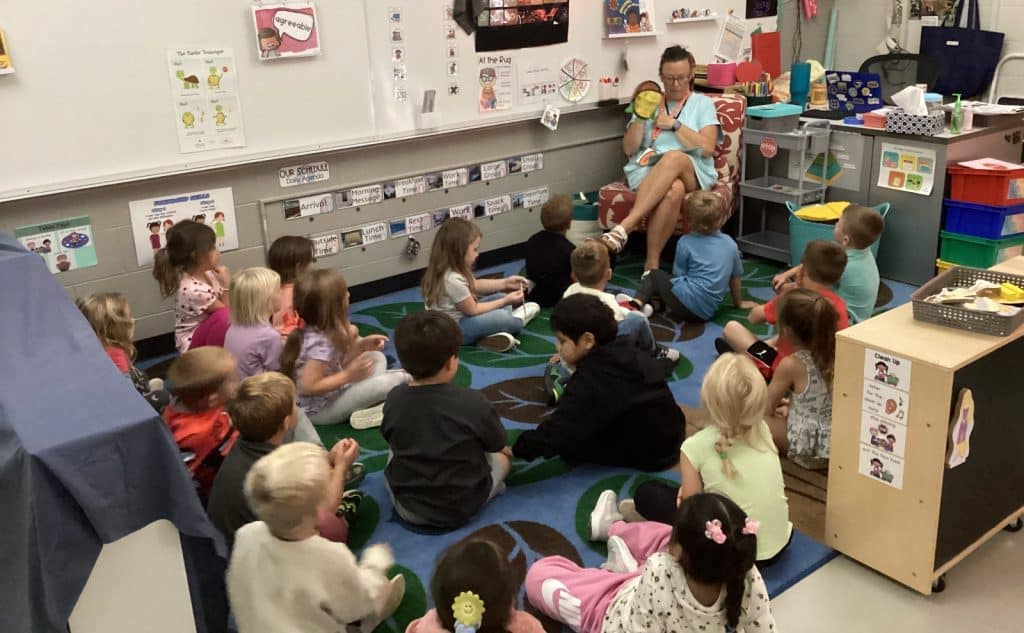
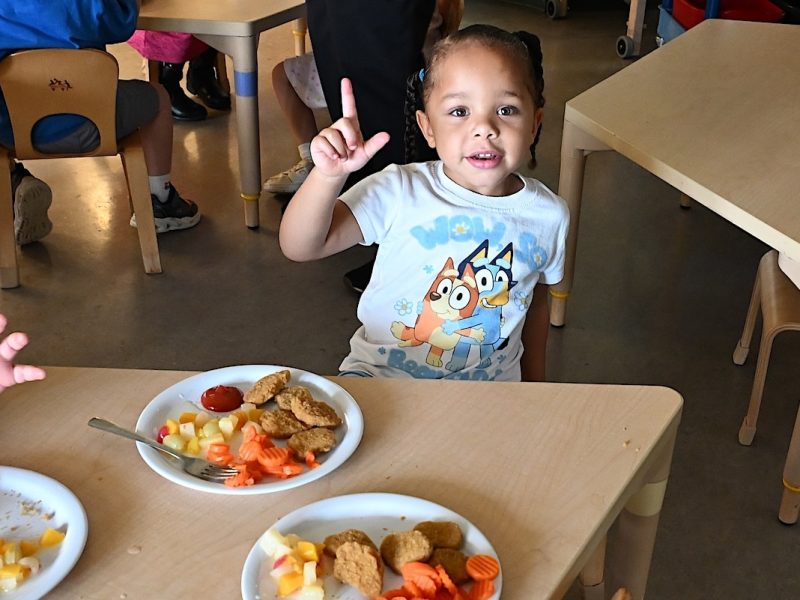
Each morning at Martin Public Schools, Megan DeKoekkoek greets her 4-year-old students as they step off the bus.
Many of the children happily wave to familiar staff members they recognize. They know where to hang their backpacks. They know which hallway leads to their classroom. Most of all, they know they belong.
“That familiarity really takes away the anxiety of starting school,” DeKoekkoek says. “By the time they get to kindergarten, they already know the routines, the building, and the people. They come in confident.”
The state reports record-breaking prekindergarten enrollment this year. Classrooms like DeKoekkoek’s show what that growth looks like at the local level and how expanded access to preschool is changing early education across Allegan County.
Income caps eliminated
DeKoekkoek, a lead teacher in Martin’s Great Start Readiness Program classroom, is part of Michigan’s PreK for All initiative, which is changing early education across Allegan County.
The Michigan Department of Lifelong Education, Advancement, and Potential announced in November that more than 51,000 children statewide are enrolled in PreK for All programs for the 2025–26 school year. That number already surpasses last year’s final enrollment total and reflects nearly 9,000 additional children compared with the same time last year.
“I am excited to see that more than 51,000 Michigan children are enrolled in PreK for All and are benefiting from a quality education,” MiLEAP Director Beverly Walker-Griffea says. “With more than two months left for families to enroll, even more children will have the chance to benefit.”
That statewide growth mirrors what has happened in Allegan County. After PreK for All began, enrollment in Allegan grew from 292 students in the 2023–24 school year to 455 in 2024-25 and 480 students already this fall.
“That’s just more access to preschool,” says Kammy Leep, director of early childhood services at the Allegan Area Educational Service Agency (Allegan Area ESA). “And not only more access, but access at no cost. It’s a game changer for families.”
PreK for All expanded Michigan’s Great Start Readiness Program to families of all income levels, removing previous eligibility limits. The program saves families an estimated $14,000 per year in child care costs and includes full-day programming, meals, and transportation options in some areas.
“Prior to the implementation of PreK for All, there were families who fell into that in-between space,” Leep says. “They didn’t qualify for free preschool, but they also couldn’t afford it. This removes that barrier.”
DeKoekkoek is happy to see the program extended to more families.
“Families from all backgrounds can benefit from this,” she says. “A student’s needs should never be based on income.”
Kindergarteners more ready to learn
Those early experiences are already making a difference in kindergarten classrooms, according to Beth Ayotte, principal at Fennville Public Schools.
“A preschool experience is invaluable,” Ayotte says. “It helps students hit the ground running when they get to kindergarten.”
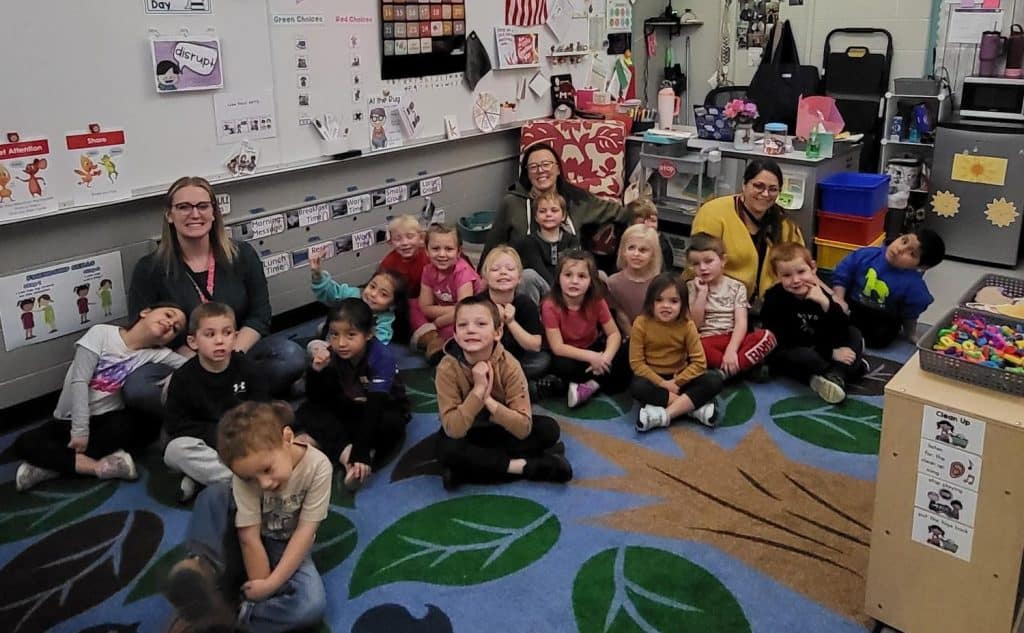
Ayotte says much of that readiness has less to do with academics and more to do with learning how school works. She adds that things like following directions, transitioning from one activity to another, and understanding routines are critical.
“Without those skills, learning is much harder,” Ayotte says.
This fall, kindergarten test results in Fennville showed that students were well prepared.
“Students are coming in knowing their letters, writing their names, and counting with one-to-one correspondence,” Ayotte says. “Teachers can move faster into more complex learning instead of spending weeks on basics.”
Leep says the results are linked to a countywide focus on social and emotional learning, led by Allegan County’s Early Childhood Advisory Committee. The goal is to help 4-year-olds before learning gaps show up later in school.
“Early intervention works best when it happens early,” Leep says. “This gives us a chance to support kids before challenges grow.”
Author

Related Articles
Is PreK for All meeting its goals?
Roadmap co-author encouraged by how the state is expanding its Great Start Readiness Program into universal pre-K.
Allegan Area ESA educators honored for supporting student success
Three Allegan Area ESA award winners help students and families thrive through early intervention, school safety, and work-based learning opportunities.
The Farm Bill, SNAP, and the childcare connection
SNAP helps families meet all basic needs, including childcare.