Students lead new school safety conversations through restorative circles
Allegan County students share experiences through restorative circles, guiding community leaders toward proactive, collaborative approaches to school safety and student well-being.
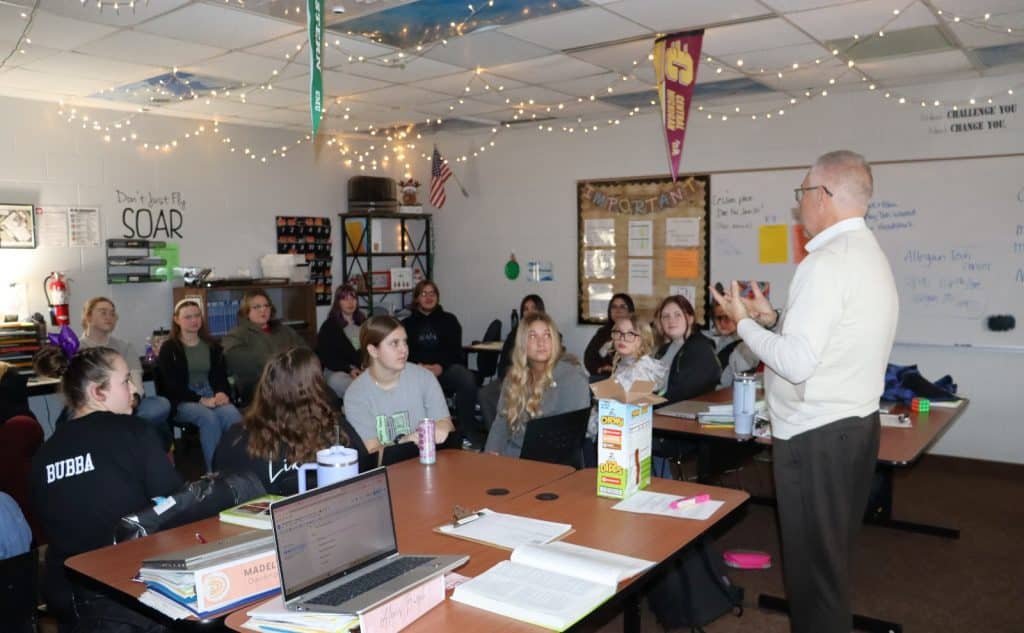
A new program in Allegan County is focused on helping schools think about safety.
The Safe Schools Network of Allegan Area ESA is launching Safe Circles at the Allegan Tech Center, giving students a direct voice in conversations about physical, emotional, and psychological safety.
The circles are based on student responses from a countywide Student Voice Survey and are facilitated by William Brown, superintendent of Allegan Area ESA, and Jennifer Hamman, restorative practice facilitator for Allegan Public Schools.
“We need to elevate student voice and work with our students around school safety,” Brown says. “We’re a bunch of adults sitting in a room thinking we know everything, and we’re not getting any input from the students.”
Atmosphere of trust
The survey, completed earlier this school year by 159 students, asked about how safe they feel, what concerns exist, and what changes they would like to see. That feedback now guides the circle conversations taking place this month.
The circles are structured to remove hierarchy and create trust. Students and facilitators sit at the same level.
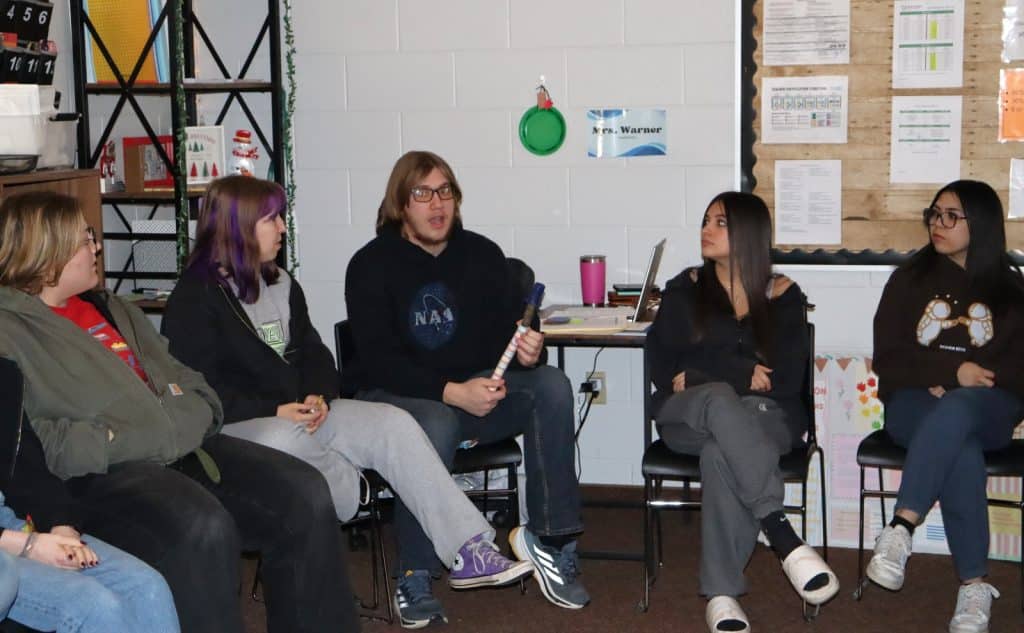
“We sit in a circle because no one is in front of you or behind you; everyone has an equal voice,” Brown says. “You cannot speak unless you are holding the talking piece.”
Students can pass if they are uncomfortable speaking, but many still share. When asked if they know someone who has been bullied, every student raises a hand.
“100% of the students raised their hands,” Brown says.
About 80% report that the bullying happens through social media, such as Instagram and TikTok. The situation has only worsened with fake accounts and AI-generated images.
Brown says one student told him rules only change the behavior of the rule followers.
“You cannot punish this away,” says Brown. “The punishment no longer works. Students are asking adults to do something different.”
Rethinking discipline
Hamman has worked in restorative practices for more than a decade. She says students want accountability, but also understanding.
“So much of restorative work is elevating voice,” Hamman says. “Every skill you use in a circle, you will use in relationships for the rest of your life.”
She says traditional discipline often fails to address root causes and sometimes benefits students who want to avoid school.
“Punitive consequences can feel like a reward,” she says. “It is really hard to sit at a table with someone you’ve affected and hear that and then create a pathway forward.”
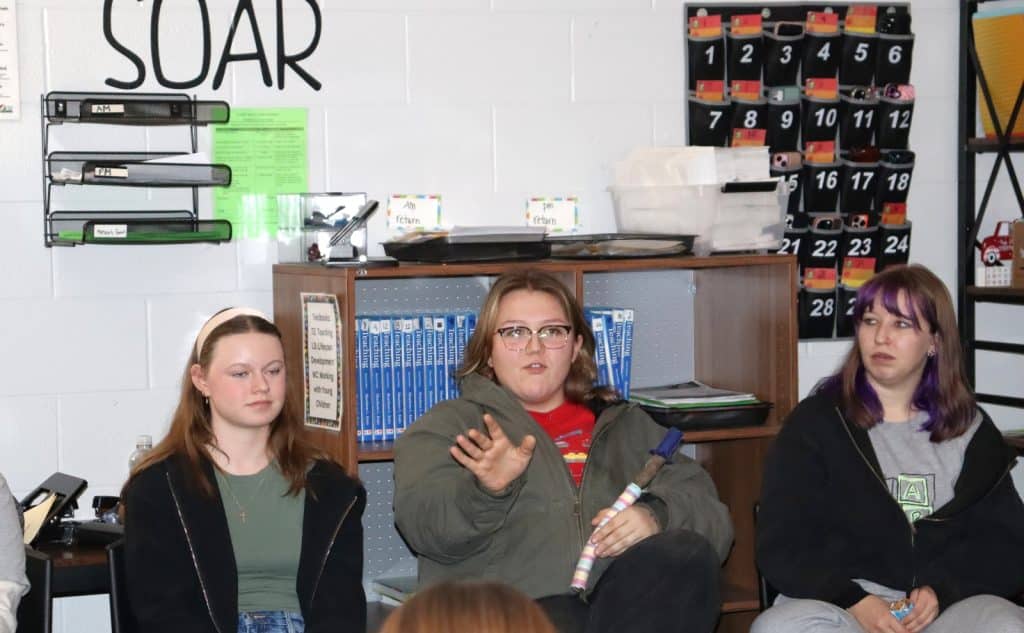
Hamman says restorative practices guide students to understand how their actions affect others and how to repair harm rather than avoid responsibility.
Over 10 years ago, Hamman began implementing restorative practices at Allegan Alternative High School, a program serving fewer than 100 students. Within the first year, suspensions were reduced by 50%, demonstrating the immediate impact of intentional, relationship-centered discipline practices.
When the school closed, Hamman was asked to lead the development of a restorative practices program at Allegan High School, serving approximately 710 students. Based on prior success, Hamman was confident that, with time, this work could significantly improve school climate and culture at a larger scale.
Through efforts focused on strengthening culture and climate and elevating student voice, positive shifts in discipline outcomes are already being seen. Over the past three years, Allegan High School has experienced a sustained decrease in suspensions, including a 64% reduction from the 2023–24 school year to the 2024–25 school year, she says.
“As a result, we have added back 464 days of instruction, ensuring students are in school and engaged in learning,” Hamman says. “We know that increased time in school and staying connected to instruction puts students on track for stronger academic success. We believe restorative practices, specifically proactive circles, restorative circles, and structured suspension reentry processes, have played a notable role in this reduction.”
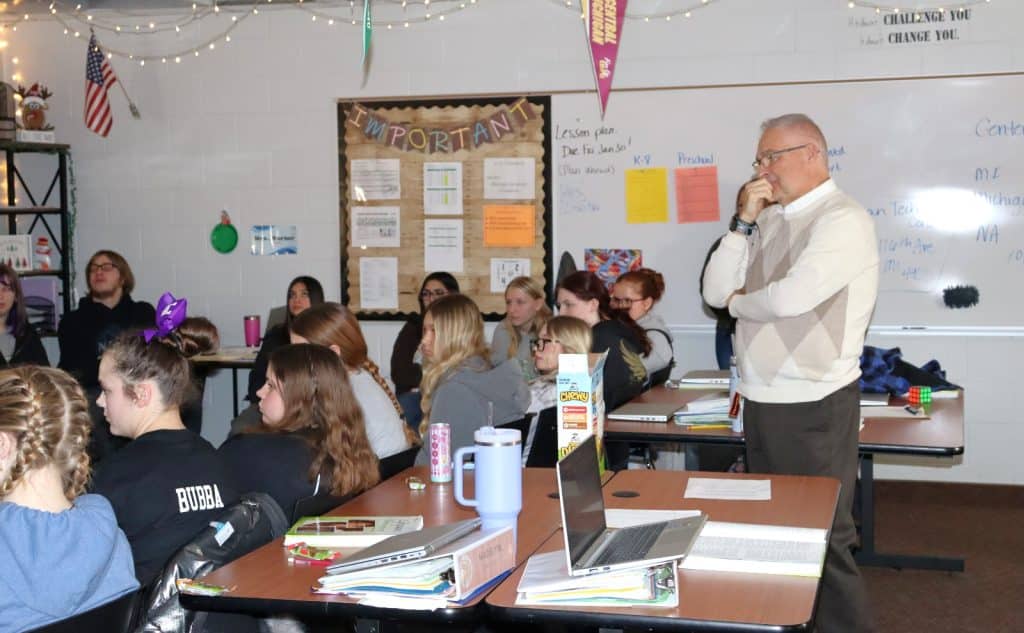
Hamman says the restorative practices are intentionally aligned with other support frameworks already in place.
“By leveraging these systems together, we have seen a meaningful and sustained decline in suspensions, reinforcing the power of a comprehensive, student-centered approach to discipline,” Hamman says.
The circles do not end with conversation. Brown compiles themes and shares them, without identifying students or districts, with the Allegan Area ESA, Emergency Management, and local superintendents.
The feedback helps guide planning for the annual Safe Schools Network Conference in November, which brings together superintendents, law enforcement, the FBI, school resource officers, fire chiefs, mental health providers, the Allegan County Community Foundation, and community volunteers.
“We don’t know this stuff if nobody tells us,” Brown says.
Collaboration and support
The majority of restorative work is proactive. It’s culture and relationship building, Hamman explains.
The Allegan County Community Foundation is supporting the Safe Schools Network, managing shared funds and providing accountability.
“Serving as the fiduciary was a natural role for us,” says Stephanie Calhoun, foundation president and CEO. “Our mission is to bring partners together, steward resources responsibly, and support efforts that strengthen the well-being of our community.”
She says the structure allows schools and agencies to work together.
“This role makes collaboration possible,” Calhoun says. “It allows partners to pool funding, pursue grants, share training, and focus on prevention.”
Much of the work happens before crises occur.
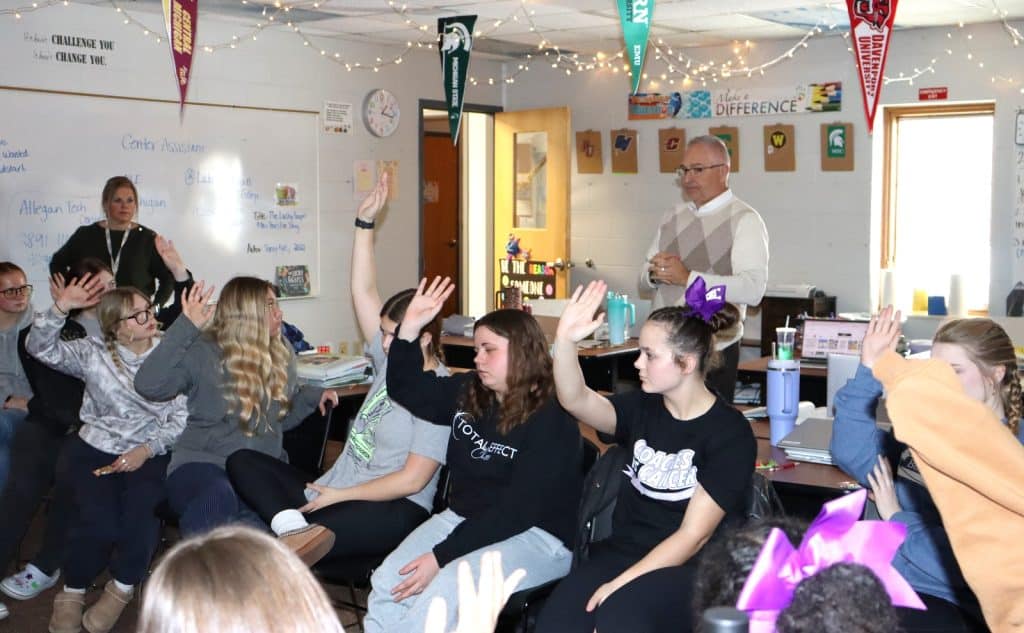
The circles are based on results from a countywide Student Voice Survey and are facilitated by Allegan Area ESA Superintendent William Brown and restorative practice facilitator Jennifer Hamman.
“Safety isn’t just about physical security,” Calhoun says. “It’s about connection, early intervention, and ensuring students feel supported and seen.”
Brown and Hamman say the work reflects a shift in how school safety is addressed from control to connection, from punishment to problem-solving.
“Students are asking adults to do something different,” Brown says.
Community members can support the Safe Schools Network through the Allegan County Community Foundation at:
https://allegan.fcsuite.com/erp/donate/create/fund?funit_id=1792
Photos by Carey Stolsonburg/Allegan Area ESA
Author

Related Articles

Health center trains local residents as dental assistants to fill workforce gaps
HealthLinc, a federally qualified health center covers training costs while preparing local residents for dental assistant jobs, strengthening workforce pipelines and expanding access to care.
Students lead Anne Frank exhibit promoting empathy and community dialogue
Student docents guide visitors through Anne Frank exhibit and film event focused on history, human connection, and community understanding.
ECIC guides Michigan’s early childhood strategy
ECIC works with public agencies, community partners, philanthropy, and providers to ensure every child has a foundation for lifelong success.