Students lead Anne Frank exhibit promoting empathy and community dialogue
Student docents guide visitors through Anne Frank exhibit and film event focused on history, human connection, and community understanding.
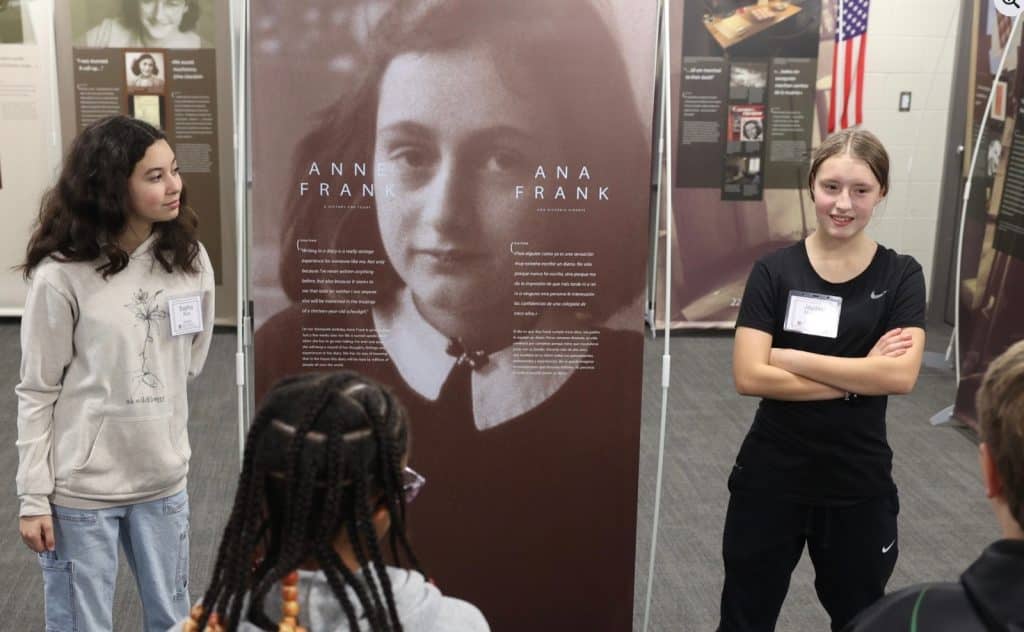
A traveling Anne Frank exhibit is coming to Allegan County to help students lead learning about kindness, listening, and understanding others.
As part of the exhibit, an event called “An Evening of Extraordinary Outcomes” will take place March 5 at The Griswold in downtown Allegan. Doors open at 6:30 p.m., and the program starts at 7 p.m.
The evening will include a showing of the film The Ice Cream Man, a discussion with the filmmakers, desserts, and a chance to walk through the Anne Frank exhibit. Trained students will guide visitors through the exhibit and share what they have learned.
The exhibit is being organized by Allegan Area ESA with help from the Allegan County Community Foundation and the Anne Frank Center at the University of South Carolina, the American and Canadian partner of the Anne Frank House in Amsterdam.
“This Anne Frank exhibit is a 26-panel traveling exhibit that tells the life of Anne Frank, and it’s all done through student docents,” says Rebecca Longcore, director of learning at Allegan Area ESA. “It’s an opportunity for students to be able to take the lead in a learning opportunity for schools, for districts, and for the community.”
Participating districts select students who undergo specialized training before guiding visitors through themes of identity, discrimination, and resilience.
“The districts select students who train to guide others through the exhibit and help them explore the themes that emerge in Anne Frank’s story,” Longcore says. “I loved the student voice in it.”
Exploring solutions
Rather than focusing solely on historical tragedy, the exhibit emphasizes solutions — such as relationship-building, empathy, and civic responsibility.
“One of the main quotes you hear Anne Frank say in the exhibit is, ‘Let me be myself,’” Longcore says. “It’s this concept of getting to know me and engaging in a relationship or friendship with who I am.”

“In this political time and in this current environment, it’s so important to focus on human connection and understanding and appreciating people for who they are,” Longcore says. “It’s set to be a fun time and a powerful experience.”
Corey Harbaugh, curriculum and instruction specialist for the Anne Frank Center at the University of South Carolina, says his path to the project began as he considered retirement after decades working in education and Holocaust studies. He had been director of curriculum and instruction for Paw Paw Public Schools in Van Buren County.
“I have been doing work in Holocaust education for going on two decades,” Harbaugh says. “When it was time to start thinking about retirement, I told the executive director of the Anne Frank Center I was thinking of retirement, and he said, ‘Come see what we do.’”
What he found changed his plans.
“When I saw the Anne Frank Center’s work, I was really excited,” he says. “It’s student-facing, and its entire goal is empowering students and centering the voice of students.”
Instead of stepping away from education, Harbaugh joined the organization to bring the exhibit to the Great Lakes region.
First county to take part
The program debuted locally at Holland Public Schools. He reached out to the school because of the community’s historical ties to the Netherlands, including support for Dutch relatives during World War II. The Netherlands is where Anne Frank lived and went into hiding before being arrested.
“We started thinking: what would it be like to have this program shared across an entire county?” Harbaugh says.
Allegan County is the first countywide consortium in the nation to host the initiative.
“We would train 200 students, 10,000 students would see it, and we would have dialogue about what it means to be in community,” he says. “The whole story of Anne Frank is that we have to listen to young people. We have to give them a chance to speak.”
Bill Brown, superintendent of Allegan Area ESA, says the exhibit aligns closely with the district’s educational philosophy.

“This experience supports the Whole Child Framework by promoting healthy and cohesive communities in which all voices are honored,” Brown says. “Our vision states that we will ensure every learner, school, and community thrives.”
He says feedback from earlier exhibits demonstrated how experiential learning can reinforce academic and social growth simultaneously.
“I hope they realize that we are one community connected by our humanness and lived experiences,” he says. “We can see, honor, and embrace our differences, which ultimately brings unity to society.”
In a polarized political climate, she says that focus feels especially relevant.
A defining feature of the Allegan County initiative is collaboration across districts that often operate independently.
“Schools often exist as silos,” Harbaugh says. “But this event is about the schools of Allegan County as a unified conversation centered on youth voice.”
Students trained as docents come from the 10 districts in the Allegan Area ESA.
“You’ll see students from different schools working together as a team — not as rival schools, but as students of Allegan County,” he says. “It’s really, really cool.”
Organizers say shared experiences help people understand each other and bring communities together.
Powerful choices
The evening’s centerpiece film, The Ice Cream Man, expands those themes beyond Anne Frank’s story.
The award-winning short film tells the story of Ernst Kahn, a Jewish ice cream shop owner in Nazi-occupied Amsterdam, who lived within walking distance of Anne’s home.
“The film tells the true story of Ernst Kahn, an ice cream shop owner in Amsterdam who faced what we call ‘choiceless choices,’” Harbaugh says. “What do you choose when you have no choice?”
The film shows how people made hard choices during difficult times and helps viewers think about how everyday people can change history.
“Ernst Kahn was an ordinary man. Anne Frank was an ordinary girl, but their legacy became the extraordinary outcome,” Harbaugh says. “Ordinary people can really impact the world.”
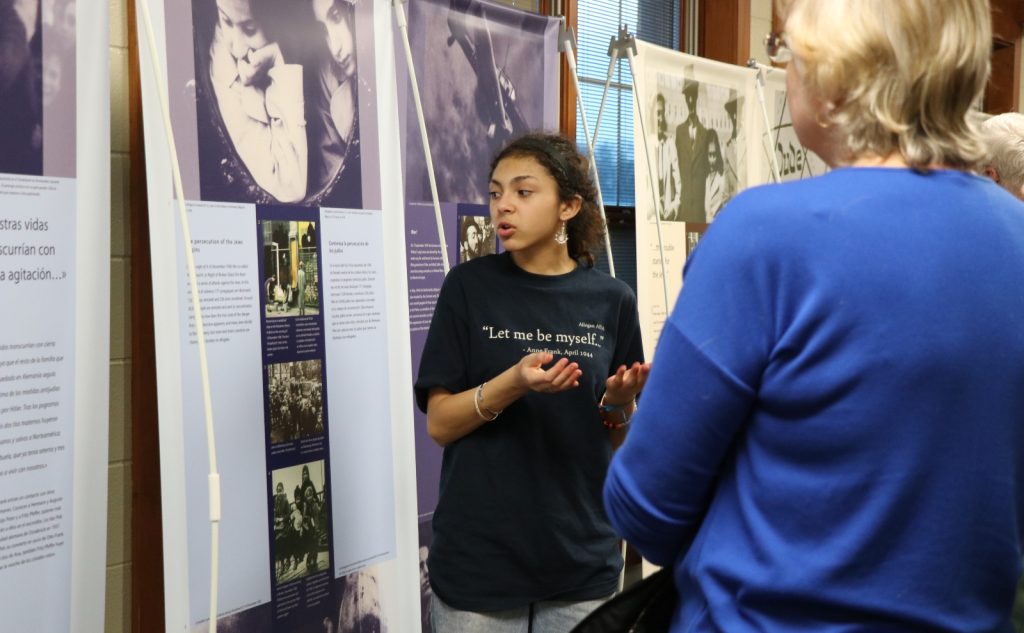
Following the screening, the director, producers, and cast members will participate in a live question-and-answer session.
The event comes as many are feeling discouraged by current events.
“As a 57-year-old, when I look at the headlines, it’s easy to despair,” he says. “But I get to work with young people, and their experience of the world is naturally based in optimism.”
That optimism, he says, offers a solution.
Photos courtesy of Corey Harbaugh
Author

Related Articles

Health center trains local residents as dental assistants to fill workforce gaps
HealthLinc, a federally qualified health center covers training costs while preparing local residents for dental assistant jobs, strengthening workforce pipelines and expanding access to care.
Students lead new school safety conversations through restorative circles
Allegan County students share experiences through restorative circles, guiding community leaders toward proactive, collaborative approaches to school safety and student well-being.
ECIC guides Michigan’s early childhood strategy
ECIC works with public agencies, community partners, philanthropy, and providers to ensure every child has a foundation for lifelong success.