Try poetry instead of politics at your Thanksgiving gathering
Want an alternative to a divisive political conversation around the Thanksgiving table? Try reading aloud these poems about gratitude.
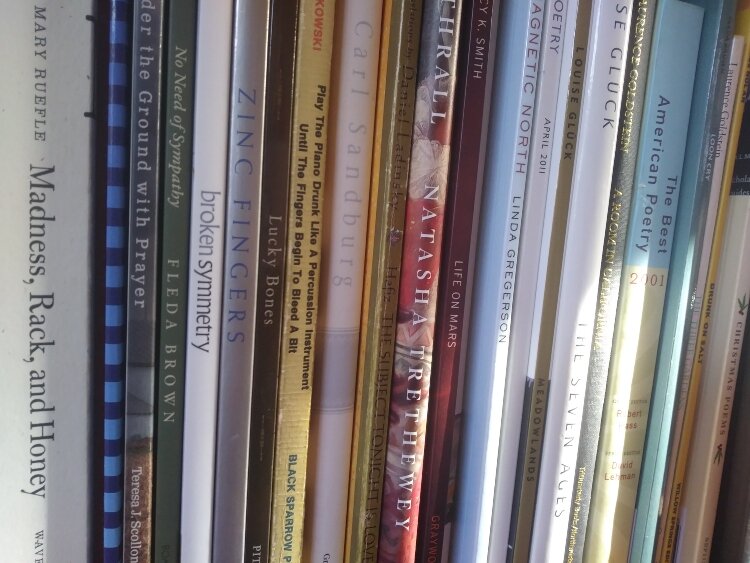
In case you have a relative who likes to stir the political pot whenever the family gathers, I offer you a graceful detour in the form of poetry. Five Michigan poets express gratitude in her or his own way. Thank you for keeping the peace with poetry. Your family will thank you, too.
1. Gordon Henry Jr. is an Anishinabe and an enrolled member of the White Earth Chippewa Tribe of Minnesota. Henry teaches at Michigan State University and is familiar with the “browned autumn” he describes in his poem, “How Soon.” He is so good at knowing when to end a line, and the poem sings with deeper meaning and music. Try pausing for just a beat at each line break and see if the rhythm comes through for you.
2. Jamaal May is an accomplished poet and a Detroit native who teaches at Wayne State University. For fans of the Motor City, and for anyone who has ever witnessed their hometown mischaracterized to the point of being unseen, this short poem, “There Are Birds Here,” is for you.
3. Alison Swan worked hard to save the Saugatuck Dunes. For that alone, we are forever grateful. But she also continues to lift up writers around the state while churning out some pretty lovely pieces herself. Here she gives us advice on how to hike, which may be best reserved for the warmer months.
4. Jack Ridl is Douglas’ poet laureate. I don’t know how much you know about poetry readings, but if there are two people there and one’s the poet, consider it a win. Ridl gives readings that are standing room only. This poem, “The Dry Wallers Listen to Sinatra While They Work,” is one of Ridl’s greatest hits. I hope you hum along.
5. From the Poetry Foundation: Iraqi American poet Dunya Mikhail immigrated to the United States in the mid-1990s after being placed on Saddam Hussein’s enemies list. Now in the Detroit suburb of Sterling Heights, she explains, “Here, in America, a word does not usually cost a poet her life.” The poem “The Artist Child” has two speakers, each preceded by an em dash (— ). It’s a duet, so if you like, two people can read this one aloud.
More poetry options: If you have been inspired by the Lakeshore Big Read, which has highlighted U.S. poet laureate Joy Harjo’s book “An American Sunrise,” you might want to check out her other work. Harjo envisioned and organized “Living Nations, Living Words: A Map of First Peoples Poetry”. It is an interactive map of the United States illuminating indigenous poets. Each location marker reveals a Native Nations poet and features an image, biography, and a link to hear the poet recite and comment on an original poem. It’s a beautiful thought, beautifully done.
Have a wonderful Thanksgiving.
Author
Related Articles

Downtown Utica’s Art Nook: “Super cool place making”
Art Nook connects folks to downtown businesses and showcases a colorful mural by artist Kevin Gano.
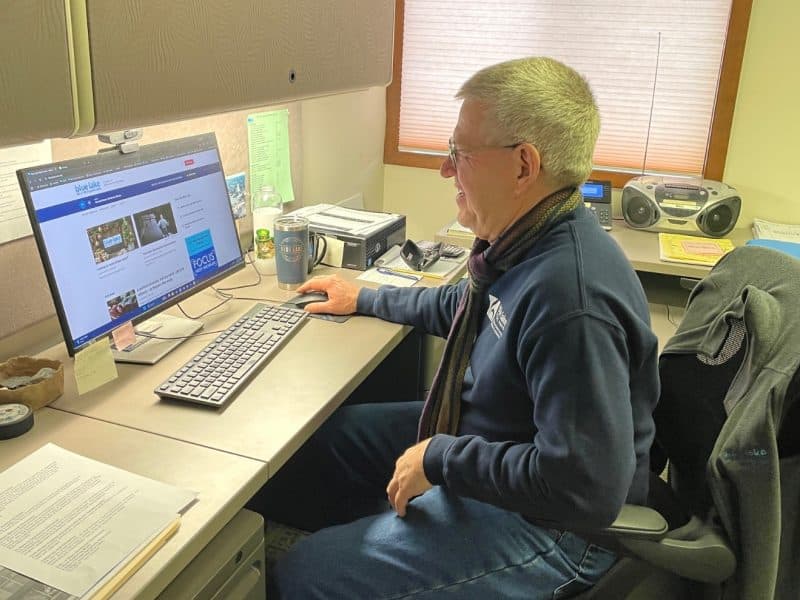
Rural radio station becomes lifeline for West Michigan’s performing arts
Broadcasting from the woods, Blue Lake Radio connects listeners, orchestras, and venues while navigating financial challenges and a shift away from news programming.

Grand Haven library launches makerspace, art studio to inspire creativity
Loutit District Library unveils technology-filled makerspace and traditional art studio, fostering lifelong learning, community engagement, and free creative opportunities.