Leadership tool helps nonprofit, church leaders strengthen teams and collaboration
New Lakeshore Nonprofit Alliance director Kory Plockmeyer shares how a leadership tool, guided by consultant Mari Martin, helps nonprofit and church leaders understand teams, reduce friction, and lead more effectively.
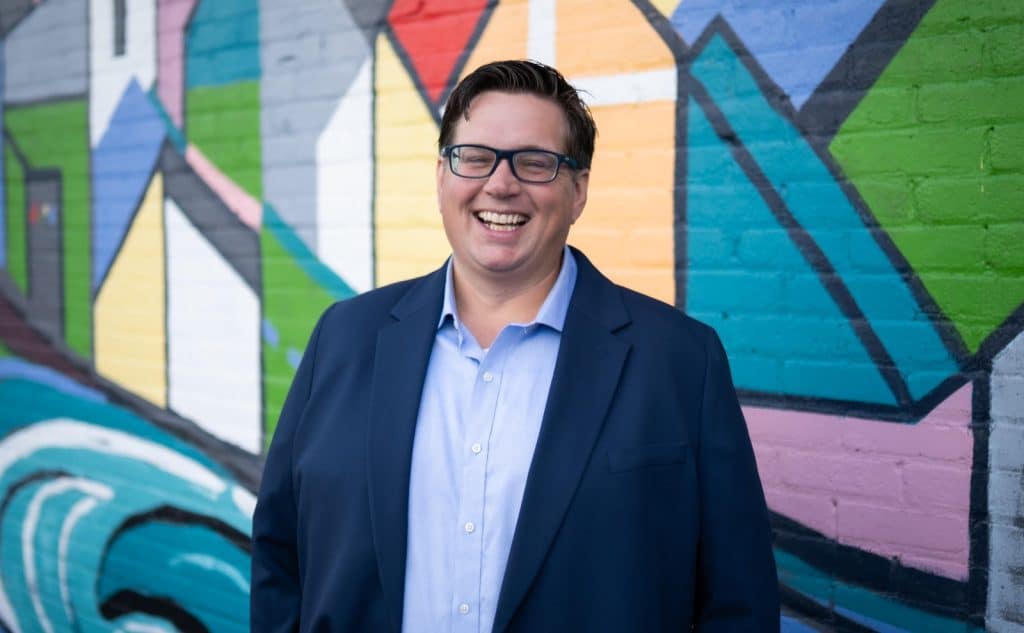
When Kory Plockmeyer applied for a nonprofit leadership job several years ago, he didn’t expect a pre-employment assessment to leave a lasting mark on how he leads.
“I didn’t really know what it was or how it was going to be used,” Plockmeyer says. “They told me it was just part of the process to understand how I operate.”
What he learned has changed how he views leadership, teamwork, and his role as an executive director.
As the new executive director of the Lakeshore Nonprofit Alliance, Plockmeyer not only relies on the same tool to guide his own leadership, but he wants to make it available to nonprofit and church leaders across the Lakeshore region.
“The biggest shift for me was realizing it wasn’t me failing as a leader to ask someone else to lean into their strengths,” Plockmeyer says. “That understanding gave me freedom I didn’t know I needed.”
Understanding work styles
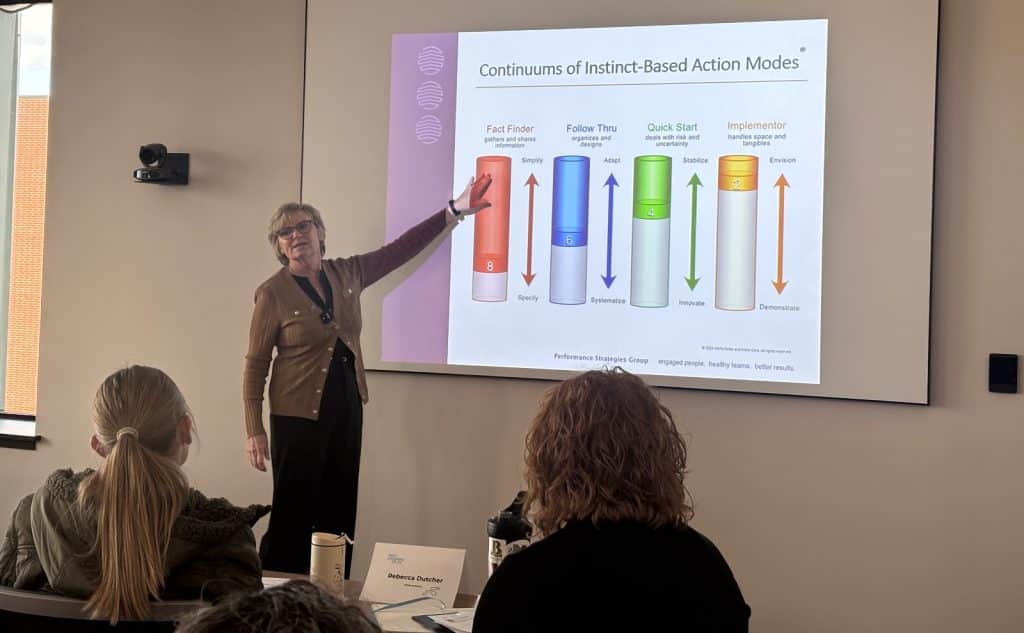
That shift grew out of Plockmeyer’s experience with the Kolbe A Index, a tool used by organizational development consultant Mari Martin to help teams understand how individuals instinctively solve problems and make decisions. Not only is the assessment seen as essential to effective hiring, but over time, it also drives stronger team collaboration.
Plockmeyer first encountered the assessment while applying for his previous role as executive director of Movement West Michigan, where it was part of the hiring process.
“To be honest, I didn’t think much about it at first,” he says. “I just completed it and went on with the process.”
The results didn’t resurface until after he started the job, and Martin, founder of Zeeland-based Performance Strategies Group, reached out to him.
“She said she had helped the organization look at my results and wanted to help us think about how we could work well together,” Plockmeyer says. “That was really my first experience working with her.”
The assessment showed Plockmeyer how he approaches work.
“I’ve always known I get energized by big ideas,” he says. “In Kolbe terms, I’m a ‘Quick Start.’”
The most important insight, he says, has less to do with his instincts and more with how they differ from those of others.
“I was working closely with someone who had very complementary strengths,” Plockmeyer says. “It helped me realize it was not only OK, but healthy, to ask them to lean into what they’re good at.”
That realization changes how he approaches leadership.
“It wasn’t me falling short,” he says. “They were energized by their strengths just as much as I was energized by mine.”
Building workplace trust
Over time, Plockmeyer learned to apply the same thinking to his entire team. The assessment helps him move from frustration to understanding, particularly when team members approach decisions differently.
“Both of my team members want more information and more detail before moving forward than I do,” he says. “Knowing that helps me slow down and provide more context.”
That adjustment builds trust, he says.
“When they come back with that information, they’re not trying to slow anything down,” Plockmeyer says. “They’re processing decisions differently, and that matters.”
Nonprofits often operate under pressure, balancing urgent missions with limited resources and small staffs. Plockmeyer believes tools that clarify how people work can reduce unnecessary tension.
“When leaders understand how they’re wired and how others are wired, it changes how they lead,” he says. “It changes how teams function.”
He says his understanding of those dynamics has affected his work at the Lakeshore Nonprofit Alliance. The organization uses the assessment internally, and Plockmeyer wants to expand access for nonprofit leaders across the region.
“It’s something we find real value in,” he says. “It helps us understand how we use our energy and how we support each other.”
Seeing work process more clearly
Martin has spent 35 years working with nonprofit, church, and business leaders to address a common challenge: people who care deeply about their work often don’t understand how to work well together.
“The work we do helps people understand how I work, how you work, what’s the work that needs to be done, and then how we do this work together,” Martin says.
She says the assessment is designed to identify natural problem-solving instincts rather than personality traits.
“It’s designed to be very generic,” Martin says. “We’re trying to understand how someone operates, how they solve problems and make decisions.”
The tool itself has not changed since its inception, she says. What has changed over the years is how organizations use the information.
“In the early 1990s, this was a new idea,” she says. “Now leaders are asking how deeply they want to use it.”
Martin says nonprofits and churches are especially suited for this work because small teams often carry wide-ranging responsibilities.
“In many cases, it’s the entire team; five people, 10 people,” she says. “Everyone completes the assessment, and then we spend time unpacking what it means for how they work together.”
To better understand how the assessment works, this writer took it and reviewed the results with Martin. Initial skepticism about whether a standardized tool could accurately reflect how someone works, given dated language in some questions, faded during the review of the results. She explained work habits and decision-making patterns that previously felt intuitive but were difficult to describe.
Martin says research shows a person’s results typically remain consistent across a lifetime, making the assessment useful beyond a single role or season of leadership.
That consistency is part of what Plockmeyer values.
“When you understand yourself better, you lead with more confidence and clarity,” he says.
Applies to other aspects of life
Martin’s work became deeply personal after her husband, Chris Martin, a broadcaster, was diagnosed with stage four throat cancer in 2013. A recurrence in 2020 led to a total laryngectomy.
“My husband’s voice box has been removed,” she says. “He does not speak.”
He now communicates using whiteboards in every room throughout their home and a portable writing tablet when they are out.
“When he has a thought, he writes it down,” Martin says.
The same awareness she teaches organizations helps her navigate caregiving and daily life.
“I don’t know how we would have managed without understanding how each of us works and what matters to the other,” she says.
Those lessons apply across settings, she says, to workplaces, families, and marriages.
“When people try to fix each other instead of understanding each other, it creates problems,” Martin says.
Plockmeyer sees that understanding as essential for nonprofit leadership.
“When leaders do better, teams do better,” he says. “And when teams do better, organizations are better positioned to serve their communities.”
He doesn’t view the assessment as a cure-all.
“It’s a starting point,” Plockmeyer says. “It gives people shared language and a way to understand each other.”
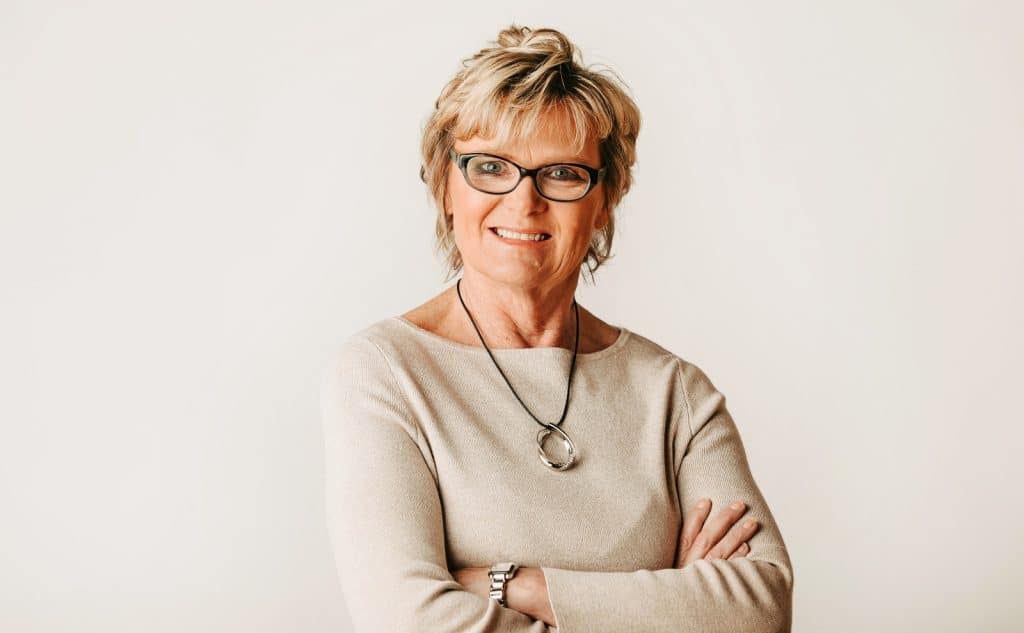
Photos courtesy of Mari Martin and Kory Plockmeyer
Related Articles
March things to do: St. Patrick’s Day events, youth concerts and art, and tapping sugar maple trees
In addition to usual suspects — music, movies, art, history, and crafts — don’t miss the business expo, home show, garden classes, blood drive, StoryWalk, egg hunts, and more in this month’s calendar.

New campaign seeks to reduce Michigan businesses’ food waste by doubling food donations
Community Action House in Holland is among the partners participating in a new initiative led by the nonprofit Michigan Sustainable Business Forum that aims to double the amount of food Michigan businesses donate to food banks and food rescue organizations.
“You keep going”: Disability and first-generation support help nontraditional student navigate college
Kathleen Camp returned to Ferris State University at 39, using support for first-generation students and services from Disability Network West Michigan to overcome barriers.