Holland author Lynn Austin highlights local ties in new novel
Holland author Lynn Austin discusses The Lumber Baron’s Wife, inspired by local history and set partly in West Michigan, during April 23 event.

Award-winning author Lynn Austin will discuss her latest novel, The Lumber Baron’s Wife, during a public event this month.
Austin is scheduled to speak at 7 p.m. on April 23 at Christ Memorial Church. The event is open to the public, and copies of the book will be available for purchase.
A Holland resident and former student at Hope College, Austin later earned a psychology degree from Southern Connecticut State University. She spent two years teaching in Bogotá, Colombia, where she says time to read sparked her desire to write fiction.
The novel weaves together two timelines, the 1870s lumber era and the present day. The story follows two women connected by long-buried secrets uncovered during the restoration of a historic estate.
Austin says her interest in storytelling began with imagination rather than books.
“I was never the type of kid who always had her nose in a book,” she says, describing a childhood spent creating stories throughout the day.
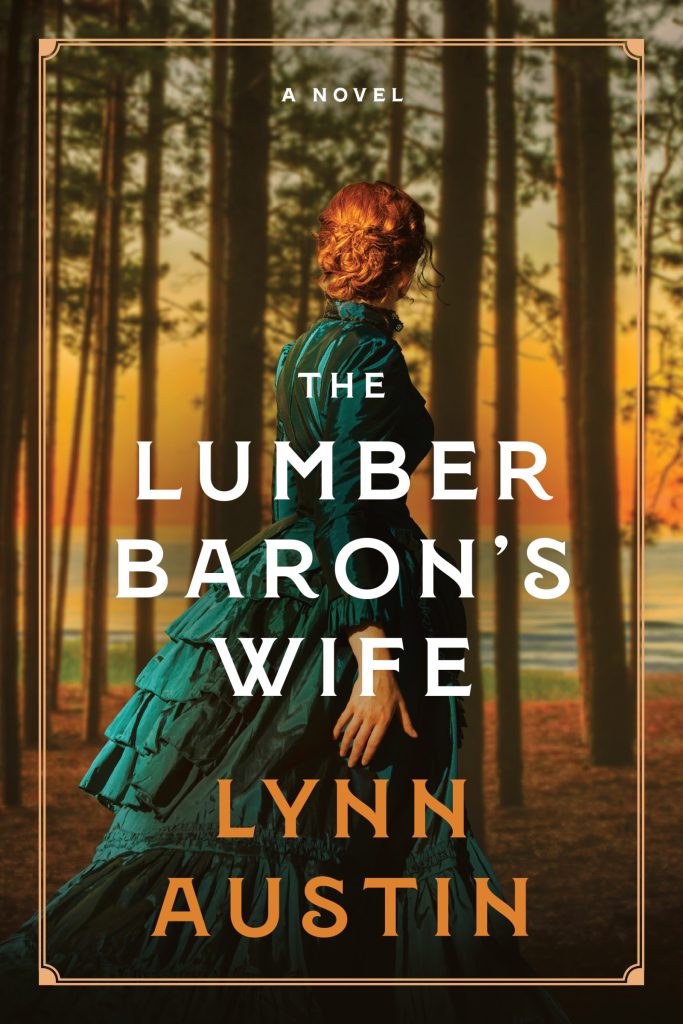
Her path to publication took years. Austin wrote in spare moments while raising her family, and after more than a decade of persistence, her first novel was published in 1995. She has since written more than 30 bestselling books and is a member of the Christy Award Hall of Fame.
The Lakeshore recently connected with Austin about her new book and her journey to becoming an award-winning author.
The Lakeshore: Many of your novels are deeply rooted in place and setting. How did the West Michigan region inspire the story and characters in The Lumber Baron’s Wife?
Lynn Austin: I live within walking distance of Lake Michigan in a beautiful area of sandy beaches, sailing, camping, and forested hiking trails. But I came across a photograph from the 1870s when Michigan looked very different. Millions of acres of virgin, white pine forestland had been cut down by greedy lumber barons in order to build cities like Chicago. They didn’t care about the environment, and they left behind a desolate wasteland. I wanted to tell that story.
TL: Your novel brings together two timelines separated by more than a century. What drew you to connect the 1870s lumbering era with a present-day storyline?
LA: The two eras are connected because, fortunately for all of us, Michigan now values and preserves the wonderful natural resources that were squandered in the 1870s. In this dual-time novel, with characters living 150 years apart, I hope to show how the past is never really in the past but produces changes that are felt in the present and into the future. Some of the mistakes made by past generations—such as destroying Michigan’s vast forests—are easy to see. The hope is that we will learn from their mistakes—and in this instance, conserve and restore our environment for future generations.
TL: The book explores an intriguing chapter of local history. What was it like to research and explore this piece of Michigan’s past, and did anything unexpected stand out to you?
LA: The novel was easy to research because one of the largest lumbering cities of the 1870s was Muskegon, only 30 miles away. It was once called “Lumber Queen of the World” and had more than 40 sawmills. Several museums in the area chronicle the history of Michigan’s lumbering industry, and how the lumbering camps operated. And the Hackley-Hume Historic Site in Muskegon features the homes of two wealthy lumber barons. Their restored mansions have been made into a museum and served as models for the lumber baron’s home in my novel, along with the story of their restoration.
As I researched this era, I became very angry at the devastation produced by greed. One thing that stood out to me was that the lumber barons didn’t realize (or didn’t care about) the damage they were doing, or how it would affect future generations. It makes me wonder what choices we unknowingly are making today that we will one day regret.
TL: How did you first get into writing, and what led you to pursue it professionally?
LA: Stories and books have always been a huge part of my life. My mother was the librarian in the New York town where I grew up. But over time I became frustrated with many of the books I was reading because, while nicely written, so few of them offered hope. So as a stay-at-home mother, I sat down one day while my children were napping and decided to try writing the kind of book I wanted to read. I chose historical fiction because we can read about the lessons of the past and see hope for our own struggles. The more I wrote, the more I discovered how much I loved the creative process. I began writing articles while I waited to find a publisher for my novel and decided to make a career out of it when my writing began to sell.
TL: Your stories are known for their rich historical detail and authenticity. What does your research process look like, and how do you transform historical facts into compelling fiction?
LA: When I’m researching a novel, I like to visit the actual setting if possible. This gives me a chance to absorb all the sights, sounds, smells, and other first-hand impressions so I can bring the setting to life. I will tour historic houses, for example, and use the floor plan and some of the period details that I observe. I find that a few well-chosen details can bring the story to life without an information dump. I also research first-person accounts of the events and of the time period, such as diaries and newspaper interviews, so I can see it through the eyes of someone who lived it.
Once I have researched the facts, they become the foundation for the novel yet remain in the background. It’s important for me to remember that I am telling an interesting story about fascinating characters, not reciting how much I know about the time period. The story and the people in it must come first.
Author

Related Articles
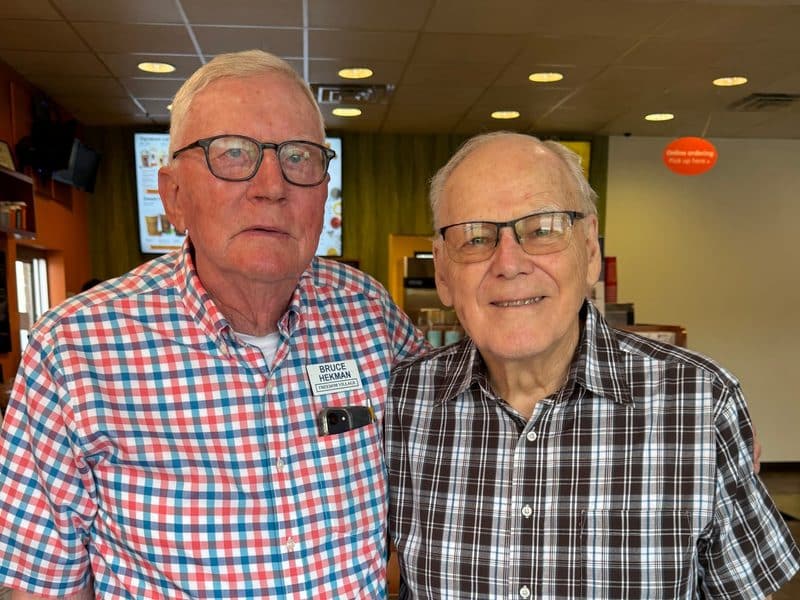
Cal Langejans: The Music Man who shaped Holland’s sound
In this Shore Story, Bruce Hekman explores how Cal Langejans enriched Lakeshore communities through music, leadership, and a lasting legacy.
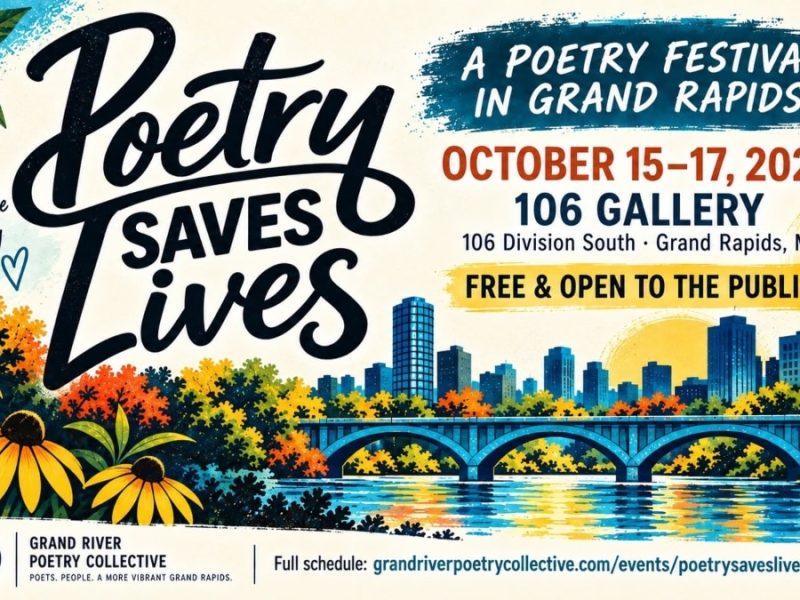
Can “Poetry Saves Lives?” Festival shares how poetry benefits mental health
Free three-day event includes panel of local mental health professionals.
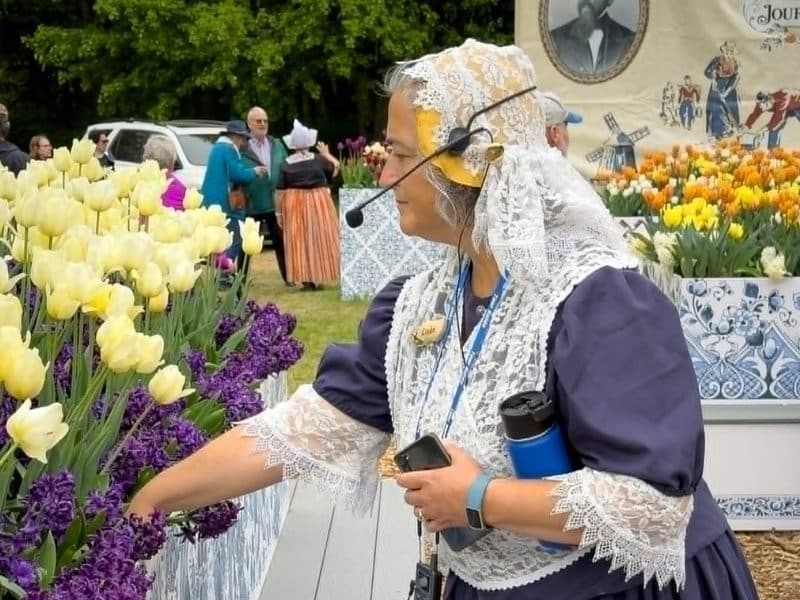
Holland to Holland tour connects residents with Dutch heritage
Holland to Holland tour takes West Michigan residents to the Netherlands to explore local history, cultural ties, and community traditions.