Habitat repair program helps Lakeshore residents remain safely in homes
Lakeshore Habitat for Humanity repairs furnaces, roofs, and accessibility hazards, helping struggling homeowners stay safely in their homes longer.
When Judith Kendall’s furnace started breaking down before winter, she did not know how she would pay to replace it.
Kendall, a widow who lives with her son in her Allegan home, says the old furnace was already on “its last leg” when a repair worker told her it could stop working at any time.
“If the furnace went out, I could never afford it,” Kendall says. “I don’t know what I’d have done.”
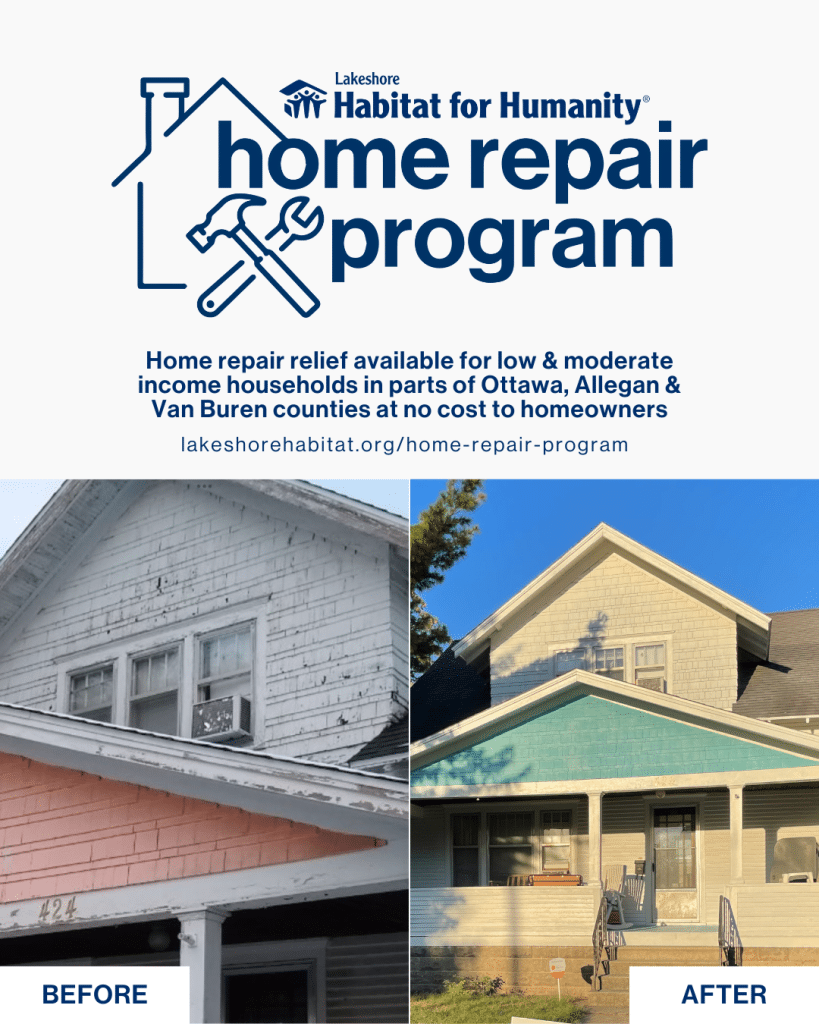
Kendall is one of many local homeowners getting help through a Lakeshore Habitat for Humanity repair program. The program helps people stay safely in the homes they already own by paying for major repairs.
The program serves homeowners in Holland, Zeeland, Allegan, and South Haven by helping pay for major repairs, including roofing, heating and cooling systems, plumbing, electrical work, accessibility upgrades, and other safety improvements.
According to Lakeshore Habitat for Humanity Home Repair Manager James Royster, the organization has completed about 12 projects totaling more than $270,000 in repairs so far.
“We’re doing a lot of critical repairs, keeping folks in their home,” Royster says.
Averting a crisis
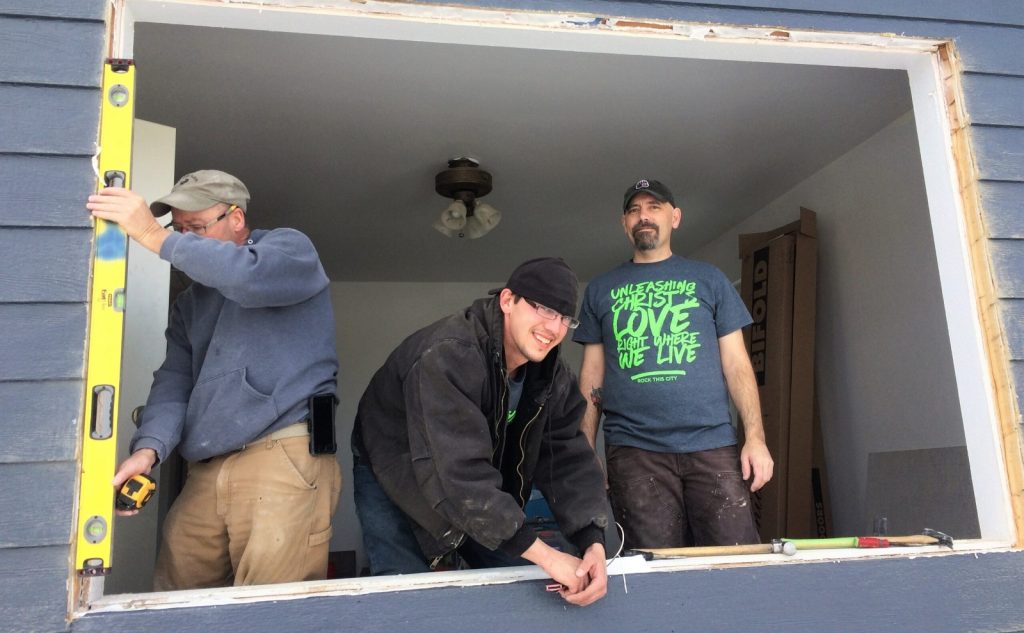
Kendall received new windows, doors, gutters, and a furnace and air conditioning system for her home, which was built in the late 1940s or early 1950s.
“I am ecstatic,” Kendall says. “They did a wonderful job.”
Kendall says she learned about the program through a mailing and filled out an application to see whether she qualified. The process took several months, but when her furnace problems became urgent, Habitat expedited the replacement.
“They said, ‘Oh yeah, absolutely, get her furnace going right away,’” she says.
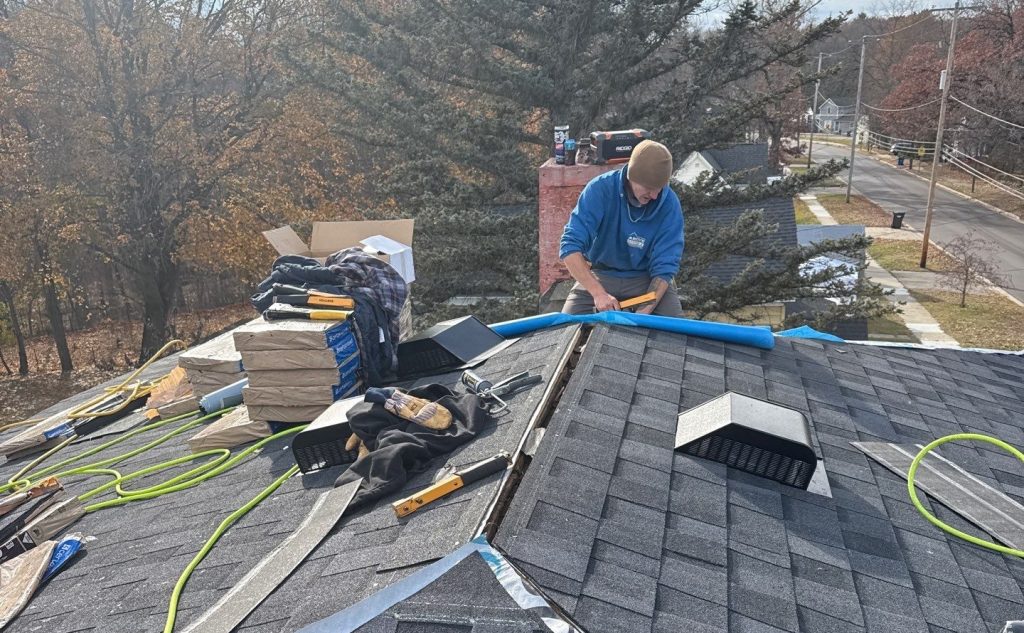
The furnace replacement came first because winter was approaching and the existing system had become unreliable. Contractors later completed the remaining repairs, including replacing windows and doors that were no longer energy-efficient and installing new gutters.
“It’s a lot warmer in my home, and I feel extremely secure with the new doors that have deadbolts,” Kendall says.
She says the new doors also improved security. Before the repairs, the front entrance had only a lightweight screen door, which she worried could be easily broken into.
“Now I can deadbolt lock that, so I feel a lot safer,” Kendall says.
Putting off needed repairs
Royster says situations like Kendall’s are common. Many homeowners, especially seniors and working families, struggle to keep up with expensive repairs until a crisis happens.
“The number of folks that are just one thing breaking at their house from being in a really bad spot is staggering,” Royster says. “This program is leaning right into that need.”
Royster cited data showing that many Americans lack the savings needed to cover major home emergencies.
“Less than 50% of Americans have enough savings to cover a $1,000 emergency expense,” he says, quoting Bankrate’s annual Emergency Savings Report from 2026.
Many homeowners living on fixed incomes cannot afford to replace a furnace, roof, or windows all at once.
Kendall says maintaining the house became much harder after her husband died five years ago.
“My husband’s been gone for five years now,” she says. “He could fix anything. Now that he’s gone, though, I can’t do any of this stuff.”
Before retiring, Kendall worked as a maintenance coordinator for Haworth Inc. She says that experience taught her the importance of staying ahead of repair issues.
“Preventive maintenance is the key to everything running like it should,” she says.
Keeping residents in their homes
That approach is central to Habitat’s repair strategy. Royster says the organization encourages homeowners to apply before a failing furnace stops working entirely or before accessibility issues become dangerous.
“We really want folks before their furnace goes out to say, let’s go ahead and get it replaced,” Royster says. “Don’t wait until you’re in an emergency, no heat, and negative 20 out.”
In another recent case, Royster says, a homeowner already approved for repairs had a furnace failure while waiting for work to begin. Because the resident was already enrolled in the program, Habitat was able to quickly respond.
“It just really took a huge load off her mind that those items were addressed,” he says.
The repair program reflects a broader shift in how some housing organizations approach affordability. While Habitat for Humanity is often associated with building new homes, Royster says preserving existing housing stock has become equally important in communities where housing inventory remains tight and home prices continue rising.
“The most affordable home oftentimes is the home somebody’s already in,” Royster says.
Rather than forcing residents to relocate after a major repair issue, the organization focuses on stabilizing homes so residents can continue living independently and safely.
“If we can do the fix-ups and get somebody’s home a new roof or a heater in that home, that home is already a paid-off home for a senior,” Royster says. “Keep that home serving them as long as they’re able to live independently. That’s the most affordable option.”
The program serves a broad range of residents. Some are retirees living in older homes with years of deferred maintenance. Others are younger families struggling to keep up with rising living costs.
“We have a lot of retirees who have deferred maintenance on their homes,” Royster says. “We also have young families that are just kind of paycheck to paycheck.”
The organization also funds accessibility upgrades designed to help aging residents remain in their homes longer. Those improvements can include grab bars, ramps, and converting traditional bathtubs into walk-in showers.
Kendall says she hopes to eventually apply for help remodeling her bathroom because getting in and out of her tub has become more difficult.
“It’s starting to be a trip hazard for me trying to get in and out of the tub,” she says.
Royster says such modifications are increasingly important as the Lakeshore population ages.
“We’re also able to do accessibility updates for folks so they can age in place,” he says. “With the age of this population, that’s very needed.”
‘They’re a godsend’
Homeowners must own and live in a single-family home and meet income guidelines based on household size and income to qualify for assistance.
Royster says the organization tries to simplify the early stages of the application process by offering an online prescreening form before applicants complete more extensive paperwork.
“The application process requires a lot of forms,” he says. “It just kind of pre-screens folks so they don’t necessarily have to do a ton of extra paperwork if they’re not going to meet some of the initial guidelines.”
Funding for the current grant cycle remains available through this year, though Royster says residents should apply sooner rather than later because repairs and approvals can take time.
Kendall says patience is important, but she encourages eligible homeowners not to hesitate to seek help.
“It ain’t gonna happen tomorrow, so I would tell them to be patient,” she says. “But once they say that they’ll do it, they do.”
She also advises residents to fully explain their home repair needs during the application process.
“Put down everything you want done,” Kendall says.
Initially, Kendall says she hesitated to ask for too much assistance.
“I thought about the bathroom, but I thought, ‘I don’t want to be greedy,’” she says.
After seeing the improvements to her home, she says she hopes more residents learn the program exists before they reach a crisis point.
“I thank God that they said they would,” Kendall says. “They’re just a godsend to help people out who need it.”
Residents can learn more about the program or complete a prescreening application through Lakeshore Habitat for Humanity.
Photos courtesy of Lakeshore Habitat for Humanity
Author