Facade grant program launches to boost Muskegon Heights downtown renewal
New grant supports storefront upgrades in Muskegon Heights’ core, encouraging private investment alongside public revitalization efforts.
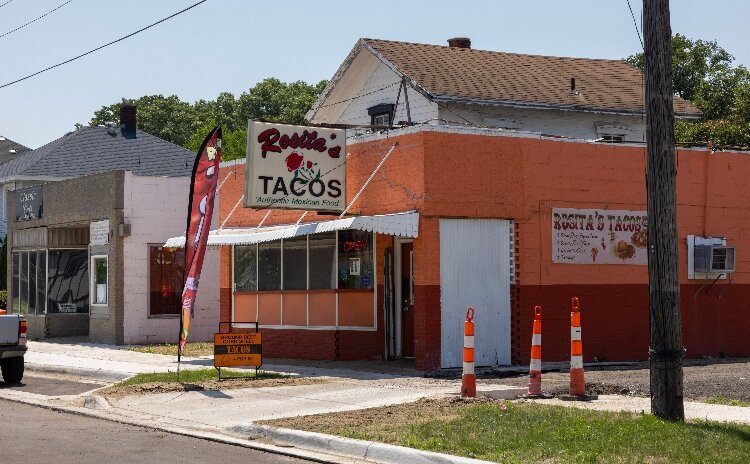
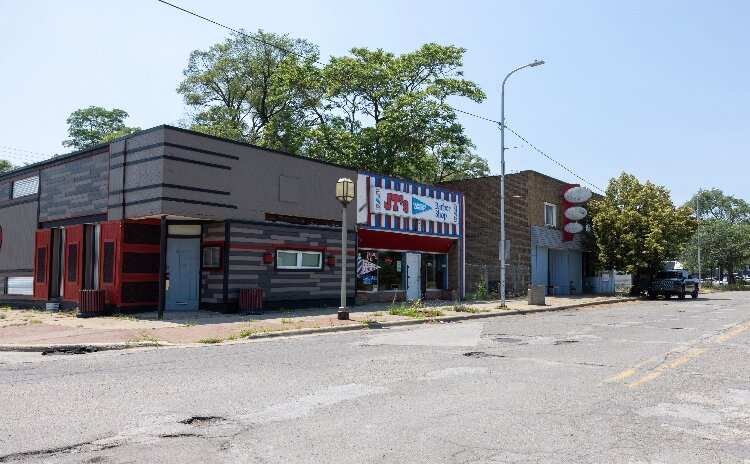

A new facade grant program is giving commercial property owners in Muskegon Heights the opportunity to reinvest in their storefronts and be part of an effort to help reshape the heart of their community.
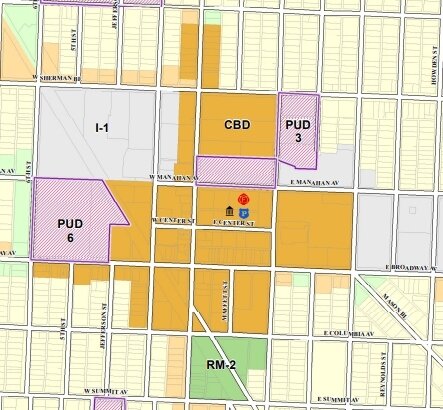
The Downtown Muskegon Heights Façade Grant Program, launched this month by the Greater Muskegon Economic Development (GMED), provides funding for exterior improvements to commercial buildings within the Downtown Development Authority (DDA) district, primarily focused around Broadway Avenue and Peck Street.
Grants can be used for projects such as painting, signs, lighting, doors, windows, and other upgrades that improve a building’s appearance. The initiative is part of a broader push to revitalize the city’s downtown by encouraging private investment to complement recent public improvements.
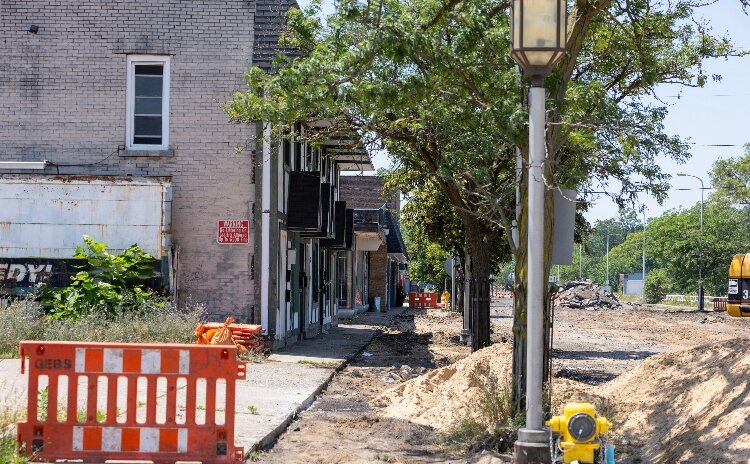
“Recently, there has been a great deal of investment in Muskegon Heights,” says Cathy Brubaker-Clarke, grants and program manager at GMED. “From the reconstruction of Broadway Avenue to plans for streetscape improvements and upgrades to Rowan Park, the public sector has taken significant steps. Now, we want to help the private sector be part of this momentum.”
The eligible area is centered on what city planners refer to as the Civic Business Center, home to City Hall, the farmers market, the library, and the African American History Museum. These landmarks are key to the identity of Muskegon Heights and were identified in the Reaching New Muskegon Heights plan. Finalized in 2022, the plan is central to efforts to restore the vibrancy of the area.
“This area is the core of downtown, and we believe focusing efforts here will serve as a catalyst for further development,” Brubaker-Clarke says. “It’s a place where change will be highly visible and immediate.”
Collaborative effort
By focusing resources on the high-impact corridor, the program aims to show the power of coordinated revitalization. Improving storefronts and commercial exteriors is expected to beautify downtown and increase foot traffic, attract new businesses, and elevate property values.
The effort is a result of collaboration between the Downtown Development Authority, the city of Muskegon Heights, GMED, and a group of sponsors that includes the Community Foundation for Muskegon County, Huntington National Bank, Route 31 Credit Union, Comerica Bank, and the Muskegon Heights DDA.
“These partnerships were essential in getting the program off the ground,” Brubaker-Clarke says. “And they bring more than funding. Business owners looking to make deeper investments have an opportunity to build relationships with local financial institutions.”
The facade grant is part of a growing number of strategies designed to stimulate long-term economic development in Muskegon Heights. By aligning public investment with incentives for private action, the city hopes to build momentum that benefits businesses, residents, and the broader community.
By focusing resources on the high-impact corridor, the program aims to show the power of coordinated revitalization.
“We see this as a jumpstart,” Brubaker-Clarke says. “With these improvements, current businesses will be better positioned to grow, and aspiring entrepreneurs, especially local residents, will have more reason to invest right here in their own city.”
Applications for the grant are open on the GMED website, and a map of eligible properties is available on the application page.
Photos courtesy of Chris Dean
Author

Related Articles

March things to do: St. Patrick’s Day events, youth concerts and art, and tapping sugar maple trees
In addition to usual suspects — music, movies, art, history, and crafts — don’t miss the business expo, home show, garden classes, blood drive, StoryWalk, egg hunts, and more in this month’s calendar.
Leadership tool helps nonprofit, church leaders strengthen teams and collaboration
New Lakeshore Nonprofit Alliance director Kory Plockmeyer shares how a leadership tool, guided by consultant Mari Martin, helps nonprofit and church leaders understand teams, reduce friction, and lead more effectively.

New campaign seeks to reduce Michigan businesses’ food waste by doubling food donations
Community Action House in Holland is among the partners participating in a new initiative led by the nonprofit Michigan Sustainable Business Forum that aims to double the amount of food Michigan businesses donate to food banks and food rescue organizations.