Disability Network West Michigan celebrates value, talent through inclusion
Disability Network West Michigan lives National Disability Employment Awareness Month year-round by empowering people with disabilities through employment, mentorship, and inclusion.
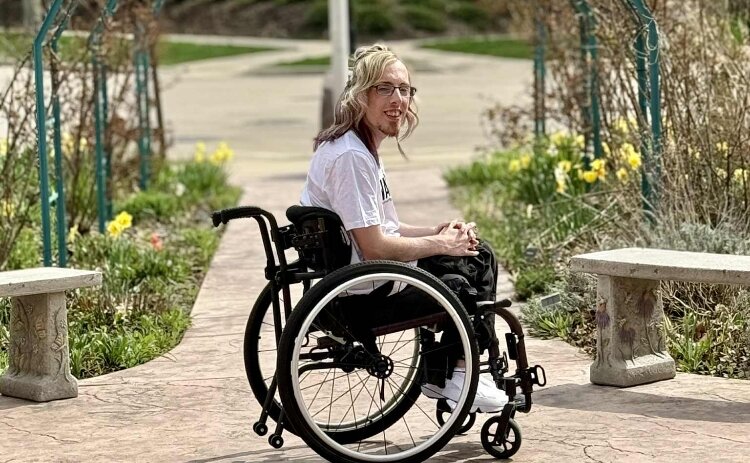
Work gives Jeffrey VanDyke a sense of purpose and belonging.
“When I finished high school and college, I didn’t really know who I was or what I was capable of,” he says. “Honestly, I felt like I was just sitting around waiting to die. I knew I was capable of more, but I didn’t know what that looked like or how to get there.”
VanDyke now works as a peer mentor and graphic design specialist at Disability Network West Michigan (DNWM). He manages social media and helps lead community education efforts, mentoring others who are navigating barriers similar to those he once faced.
October is National Disability Employment Awareness Month (NDEAM), a national observance that celebrates the contributions of workers with disabilities and promotes inclusive employment practices.
The organization focuses on this work year-round, connecting people with disabilities to opportunities for independence, employment, and community participation. DNWM also exemplifies inclusion internally. Its federal mandate requires that 51% of its staff and board members are individuals with significant disabilities.
“We truly practice what we preach,” says Amanda VanTubergen, DNWM’s director of operations. “We employ staff with varying disabilities and talents, and that diversity strengthens our mission and our impact.”
Changing a life
Nearly a decade ago, VanDyke connected with DNWM while searching for direction. Living with a severe anxiety disorder, he struggled to communicate and connect with others.
“Back in high school, if you’d asked me to speak on the phone or in person, I would have run away,” he says. “The skills I learned at Disability Network – how to work, how to feel comfortable with myself, and how to interact with others – changed that.”
He joined workshops such as My Choice, My Voice and Job Club, which offered résumé building, interview practice and workplace communication.
“That experience gave me a sense of what was possible if I found the right match or setting a place where I could fit in,” he says.
Through Michigan Rehabilitation Services, VanDyke took part in an On-the-Job Experience, a program similar to an internship that allows participants to learn workplace expectations in a supported environment.
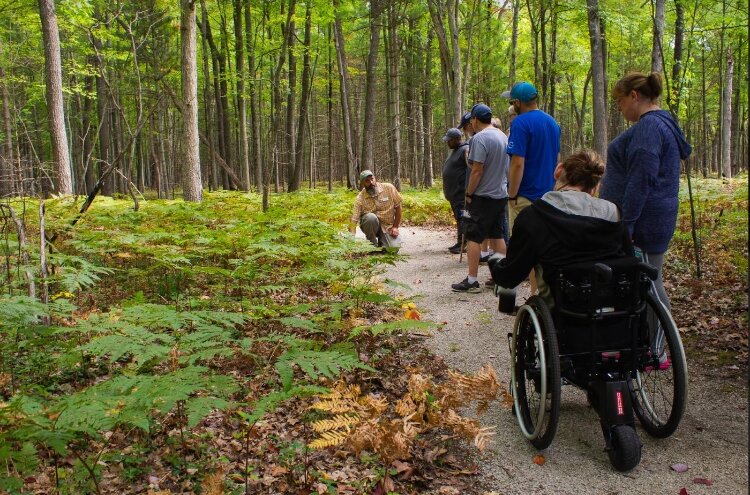
“You’re given a set number of hours to work in a real environment,” he explains. “It lets you explore what working looks like for you without worrying about failing, because you have support while you learn.”
That opportunity gave him the confidence to stay involved with DNWM. He started part time as a graphic design assistant and expanded his responsibilities over the years.
“Working at Disability Network has changed my life in every possible way,” he says. “It gave me the confidence to use public transportation on my own, to pick up the phone, to go out in the community and give presentations, to share my story — to be a voice for the next generation that I didn’t have.”
Employment became the foundation for self-confidence and purpose.
“It’s a privilege to be part of an organization where everyone’s pushing in the same direction fighting for inclusion and humanity,” he says. “To be able to use my life and experiences to help others – that’s the greatest privilege of my lifetime.”
Access to opportunity
The 2025 NDEAM theme, “Celebrating Value and Talent,” captures what DNWM has long been putting into practice: removing barriers that prevent people with disabilities from finding and maintaining employment.
“It’s a reminder of our commitment to people with disabilities having equal access to employment, financial independence, and opportunity,” VanTubergen says. “We like to highlight stories of people who’ve made progress in their employment goals.”
National Disability Employment Awareness Month also emphasizes inclusion.
“We’re here to help employers remember that a diverse workforce is a strong workforce,” VanTubergen says. “It’s about inclusion, it’s about access, and ultimately it’s about the people we serve having their independent choice and feeling empowered to make those choices.
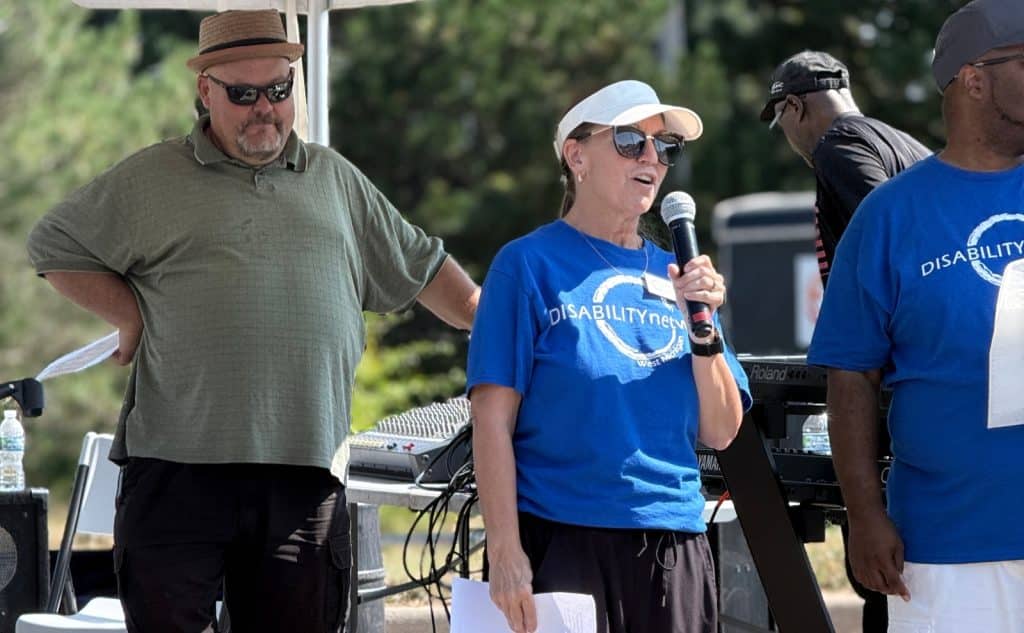
Amanda Van Tubergen speaks at a community event.
“Diversity includes individuals with disabilities,” VanTubergen says. “If you’re doing diversity without disability, you’re doing it wrong.”
Leslie Zimmerman, part of the DNWM team for nearly 10 years, has developed a reputation for helping clients overcome visible and invisible barriers to employment.
“I’ve done career assessments, identified barriers, set up job shadows, helped people fill out applications, even taught them how to report wages through the Social Security website,” Zimmerman says. “I also follow college students, helping them complete the FAFSA, find housing and apply for Medicaid or food assistance. It’s really whatever people need to move toward independence.”
She often works with people who have autism or limited work experience.
“It’s about finding the right place, whether it’s a volunteer role or a job shadow, where they can build confidence and skills,” Zimmerman says.
Zimmerman’s work is influenced by her experience with ADHD.
“I didn’t even know I had a disability until I started working here,” she says. “I always knew I struggled. In college I’d get distracted, have trouble focusing, but I never really understood why. Then I realized, oh, that’s ADHD. Since starting treatment, it’s helped me tremendously in my job and made me better at helping others.”
Her experience gives her insight into her clients’ challenges.
“A lot of barriers are invisible, and that makes them hard for others to understand,” she says. “People may look fine on the outside, but they’re struggling internally. My job is to help them identify what supports they need to be successful.”
Zimmerman says employees’ understanding of clients as peers helps them serve effectively.
“Over 51% of our staff have disabilities,” Zimmerman says. “That makes us relatable. We understand what our clients are going through and can help them navigate those challenges.”
A program that works
DNWM produces results. In 2024, the organization worked with 135 individuals who set vocational goals; 104 achieved their objectives, while 31 continued working toward them into the next fiscal year.
“We meet people where they are,” VanTubergen says, “whether they’re figuring out what kind of work interests them or learning how to advocate for accommodations in the workplace.”
While the organization does not directly place individuals in jobs, it provides services that help people develop the essential skills to find and sustain employment.
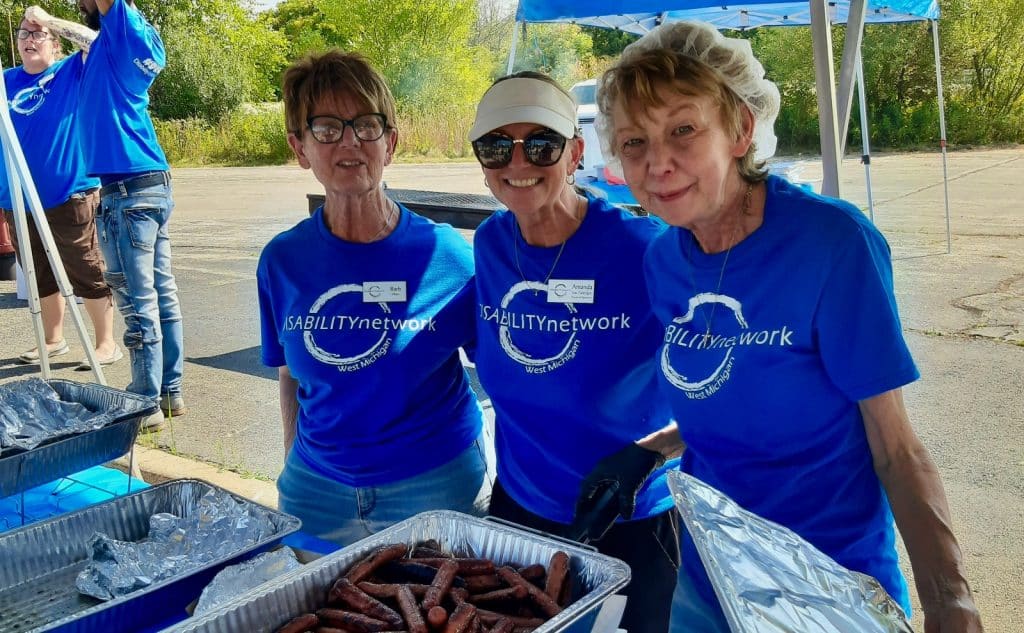
Amanda Van Tubergen, center, at DNWM event.
“We get people who have no problem finding a job; they just have a problem keeping one,” VanTubergen says. “Sometimes it’s about communication or self-advocacy. We help with those skills so they can succeed long term.”
Zimmerman says that kind of support is crucial for lasting change.
“If someone wants to make a change in their life and decides they want to work, I want them to know there are agencies out there that can help,” she says. “Disability Network and Michigan Rehabilitation Services are here to provide those supports so people can have success.”
VanDyke knows firsthand the difference that opportunity makes.
“Even though my path was rocky at times, I don’t believe I’d be who I am now without Disability Network,” he says. “I’ve figured out what I’m supposed to do here to use my voice and experiences to help the people who come after me.”
The multi-regional Disability Inclusion series is made possible through a partnership with Centers for Independent Living organizations across West Michigan.
Related Articles
Social justice awards honor people and organizations advancing equity
Community members gather during MLK week to honor local leaders creating solutions that expand equity, access, and opportunity across Holland.
Policies, programs, and research shaping maternal mental health care
How the Center for Health and Research Transformation is working to improve mental health for pregnant and parenting individuals.
Polio survivor drives advocacy and access across West Michigan
Muskegon Heights resident Larry Latin uses lived experience to improve accessibility, challenge attitudes, and promote inclusion through advocacy.