Blind advocate empowers women through technology and support
Lisa Sullivan fosters independence and connection, guiding women with disabilities such as Rosemarie Facilla through technology, resources, and encouragement.
Lisa Sullivan owns her own home, lives independently, and plays keyboards in local country bands. Blind since infancy, she navigates her surroundings with confidence and a touch of humor.
“I always joke that I can get around anywhere. It’s just people get nervous when I start running into things,” she says. “I don’t have a problem with it. They do.”
Technology is her ally. “Since I can’t see, my computer talks to me, my phone talks to me, everything talks to me,” Sullivan says. “I pretty much use normal technology with a little bit of adaptations.”
That personal independence guides her mission at Disability Network West Michigan, where she works as an information and referral specialist. From the Muskegon office, Sullivan helps people with disabilities across five counties find resources that let them live on their own terms.
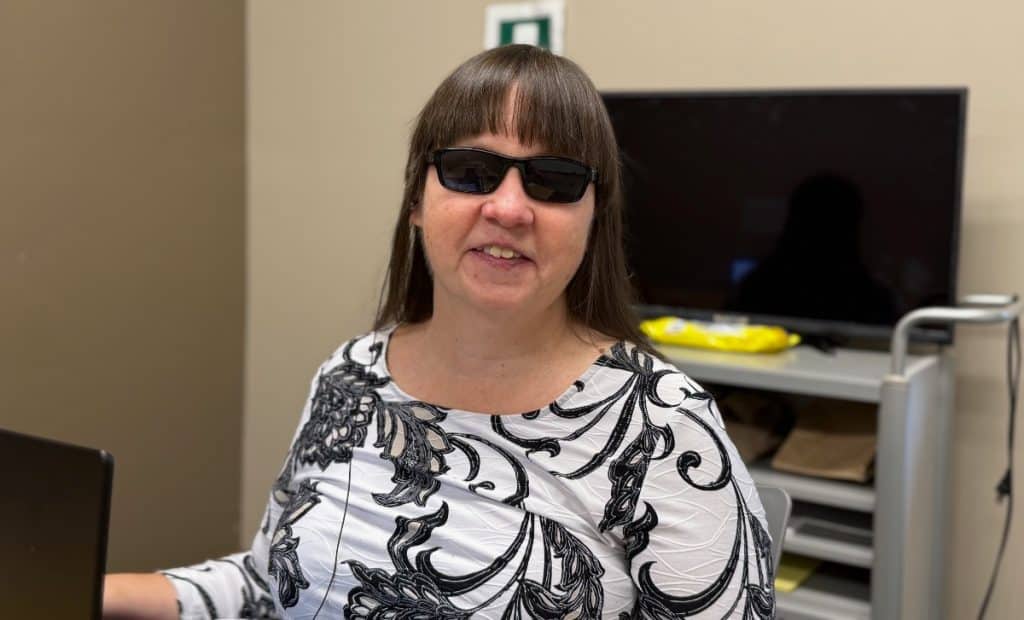
“When someone calls without a specific person in mind, the call usually comes to me,” Sullivan says. “I answer questions, make referrals to other organizations, or connect them to staff with the right expertise.”
Guiding support groups
Her responsibilities extend beyond the phone. Sullivan has organized a women’s support group and an assistive technology group that meets monthly to explore new tools and troubleshoot devices.
“We talk about the latest technology of special interest to people with disabilities, and I try to help people figure out issues with their own technology,” she says.
One of the women who relies on that woman’s support group is Rosemarie Facilla, a Muskegon resident and retired social worker for the U.S. Department of Veterans Affairs. Facilla says the group was exactly what she needed after losing her sight.
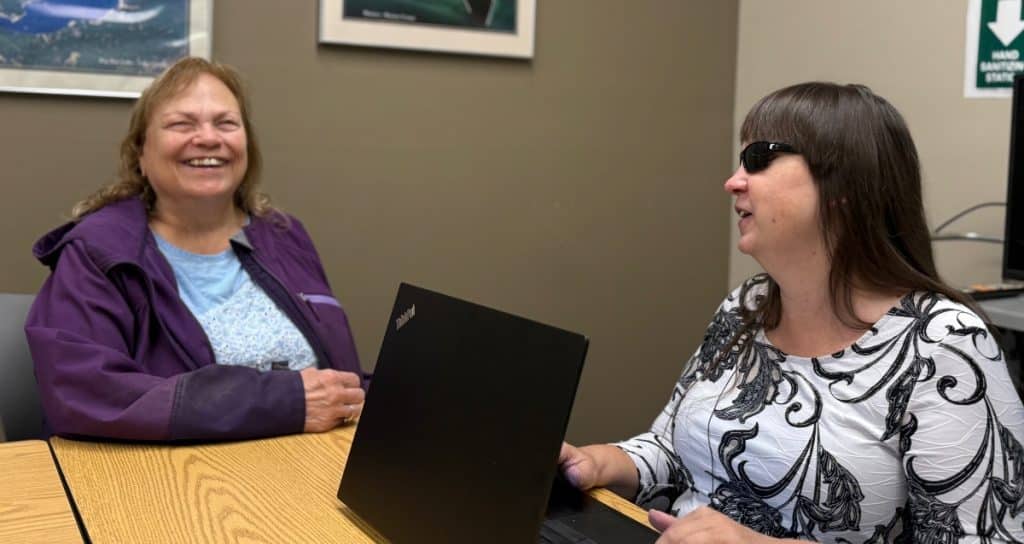
“It’s for women to support each other in daily life, like issues you come across if you’re newly blind,” she explains. “There are always things you’re not sure how to do, or where to go for resources, or just, is this normal? Is this not normal?”
Although Sullivan initially invited mostly women who are blind, the group soon expanded.
“Even those who have other disabilities need encouragement to be able to adapt and overcome,” Facilla says. “My dad was a Marine, and he just taught us, you don’t give up. You keep pushing ahead.”
Facilla speaks from experience. Growing up, she helped care for a sister who had autism at a time when the condition was poorly understood.
“Because of life experiences, you can help people with other disabilities,” she says.
“Any female person who has a disability can get the support and the acknowledgement that just because you have a disability doesn’t mean you’re stupid, doesn’t mean you can’t do things. You just have to figure out how you, as an individual, can accomplish what you want to do.”
The group offers her both friendship and insight. “It’s been fun,” she says. “I have skills that I can share, and I can listen and learn some things from other people. I may not have that particular disability, but by sharing, I can learn what it might be like.”
Sullivan values that exchange of wisdom as much as her members do.
“Especially when we do technology stuff, she’s pretty good at it,” Facilla adds, noting Sullivan’s knack for troubleshooting.
Technology part of everyday life
Beyond the support group, Sullivan manages the Muskegon County Senior Millage transportation voucher program, which reimburses drivers 62 cents per mile, up to 200 miles per month, for taking residents aged 60 and older wherever they need to go. The program addresses a common barrier for seniors who lack reliable transportation.
“It helps ease the burden of asking for a ride when you know someone might be reimbursed,” Sullivan says.
Sullivan’s passion for emerging technology drives her personal life and professional work.
She follows podcasts, YouTube channels, and email newsletters to track breakthroughs in assistive devices. One innovation she’s eager to try is the Glide, a “robot guide dog” that uses sensors and GPS to help people navigate obstacles.
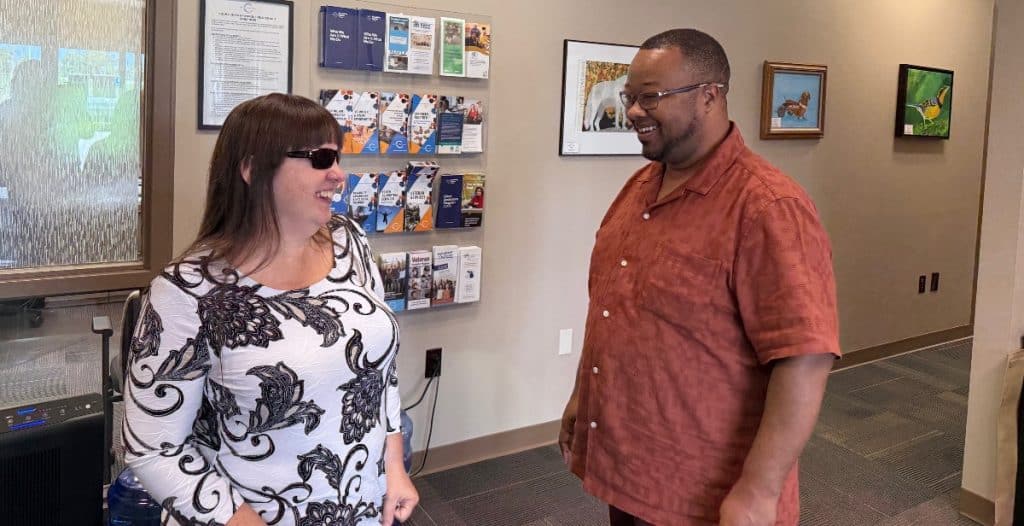
“I’m excited about that,” she says. “Technology is growing so quickly, and there are so many things out there that are fascinating to me.”
Independence is more than a personal triumph; it is a collective achievement. It’s a message Sullivan shares with everyone she meets.
“If you have a disability, you’re still a person,” she says. “I’m not amazing, I’m not sub-human, I’m not superhuman. I’m just a person.”
Facilla agrees, saying the group reinforces that spirit each month.
“We remind each other that you just keep pushing ahead,” she says. “You figure out how to do what you want to do and you don’t give up.”
Photos by Shandra Martinez
The multi-regional Disability Inclusion series is made possible through a partnership with Centers for Independent Living organizations across West Michigan.
Related Articles
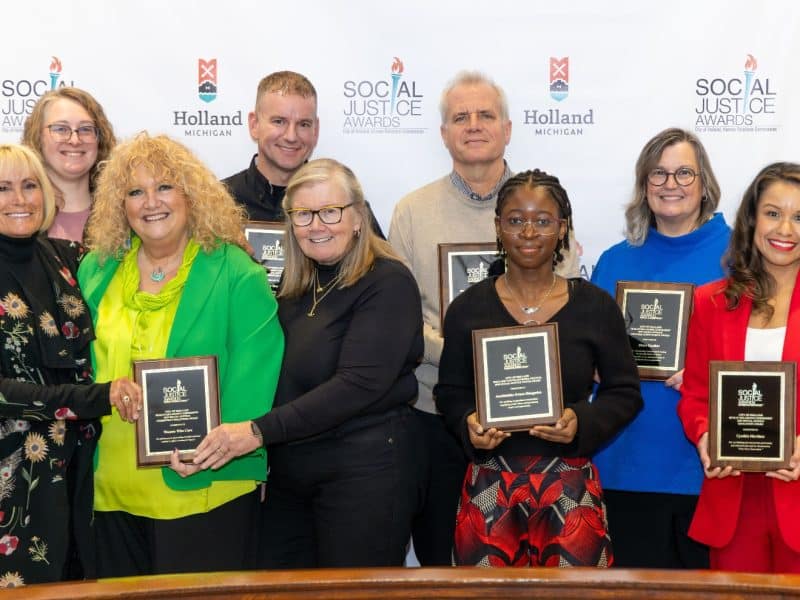
Social justice awards honor people and organizations advancing equity
Community members gather during MLK week to honor local leaders creating solutions that expand equity, access, and opportunity across Holland.
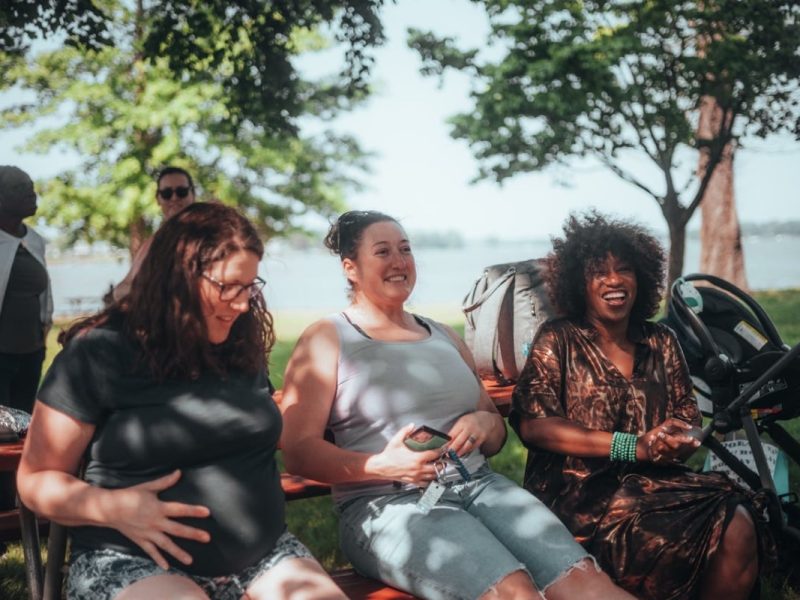
Policies, programs, and research shaping maternal mental health care
How the Center for Health and Research Transformation is working to improve mental health for pregnant and parenting individuals.
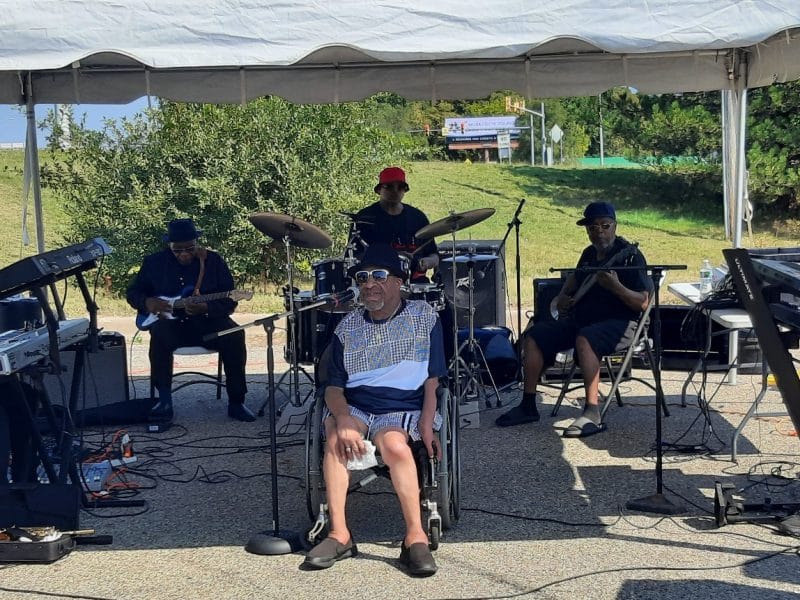
Polio survivor drives advocacy and access across West Michigan
Muskegon Heights resident Larry Latin uses lived experience to improve accessibility, challenge attitudes, and promote inclusion through advocacy.