Startup tackles food system inefficiency with direct farm-to-home delivery
Zeeland-based Locavana expands delivery, helping residents buy local food easily while increasing farmer earnings and improving access across West Michigan communities.
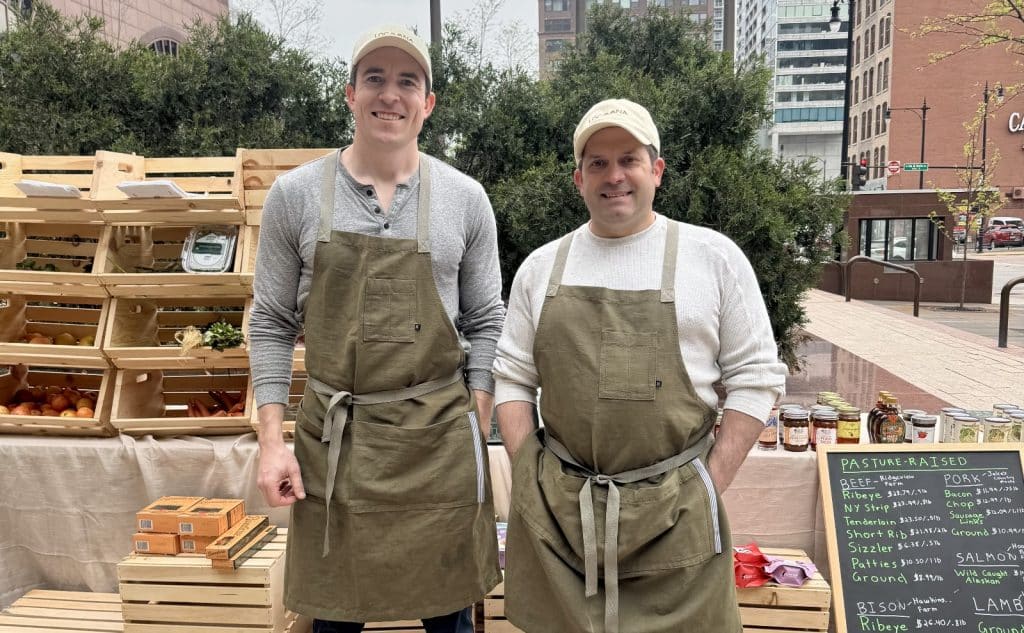
West Michigan has an abundance of orchards, dairy farms, and fields. Fresh food is all around, but it often doesn’t reach grocery stores closest to the source.
Seth Jorde says he noticed it during a regular trip to a grocery store in Sparta, in the heart of one of the country’s most productive apple-growing regions, and it didn’t make sense.
“Why are we importing apples from Chile when we’ve got all these great local vendors?” he says.
The question led Jorde and his business partner, Chris Merendino, to rethink how food moves from farm to table.
That led them to launch Locavana, a Zeeland-based startup designed to make buying from local farms as convenient as shopping at a major grocery chain.
“We saw just a ton of inefficiency,” Jorde says. “And kind of knew we wanted to do a business venture together.”
Adding efficiency, lowering costs
The pair previously worked at an investment firm in Grand Rapids. They began to notice inefficiencies in the food supply chain, where products often pass through multiple intermediaries before reaching consumers.
“If you buy organic eggs, it’s probably going to be $8 to $10 right now, and the local farmers only get to make $2 to $2.50 out of that,” Jorde says. “Each person’s taking a cut.”
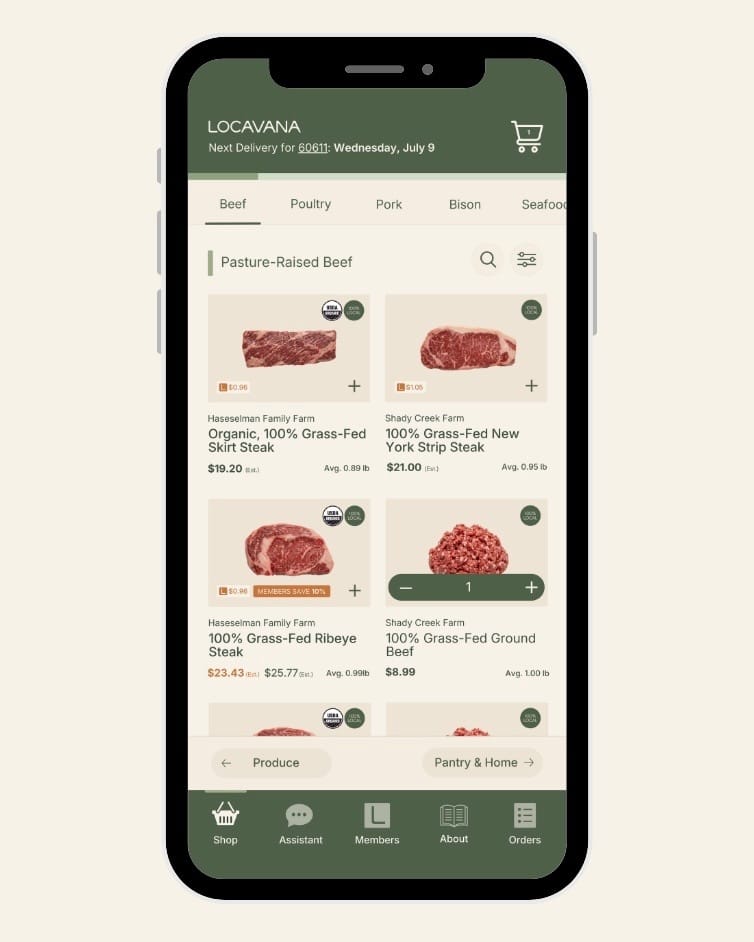
Locavana’s model is designed to reduce those layers. The company operates what Jorde describes as a “ghost grocery store,” sourcing food from local farms, organizing it in a centralized warehouse, and delivering directly to customers.
“We go straight to the customer, straight from farm to customer,” he says.
Inside its 3,500-square-foot warehouse in Zeeland, Locavana stores frozen goods and coordinates just-in-time pickups for fresh produce, aiming to maintain quality while limiting waste.
Jorde says Zeeland was chosen for its proximity to major Midwest markets.
“We strategically chose this location because it’s right in between all these major metropolitan areas,” he says. “Chicago is two and a half hours away, and Detroit is about three.”
The hub-and-spoke model reduces transportation costs while expanding reach, a key factor in making local food more competitive with large-scale grocery systems.
For the first year, Jorde and Merendino handled deliveries themselves, driving routes and building operations from the ground up. Since then, the company has grown to a team of six, with multiple delivery routes and refrigerated trucks on the road.
Nora VandenBrink, vice president of Entrepreneurship for Lakeshore Advantage, says the model addresses a common challenge for smaller farms trying to reach customers directly.
“I think Locavana is a really great example of innovation helping to further the growth and success of primary employers in our region,” VandenBrink says.
“He’s creating a marketplace that then helps these farmers and meat purveyors and others to find a new path for their goods to be sold and directed to consumers.”
Higher efficiency, lower costs
Locavana recently expanded service along the Lakeshore, from South Haven to Grand Haven, in addition to serving the Grand Rapids area and parts of the Chicago market. Through a single online checkout, customers can now access products from more than 40 local farms.
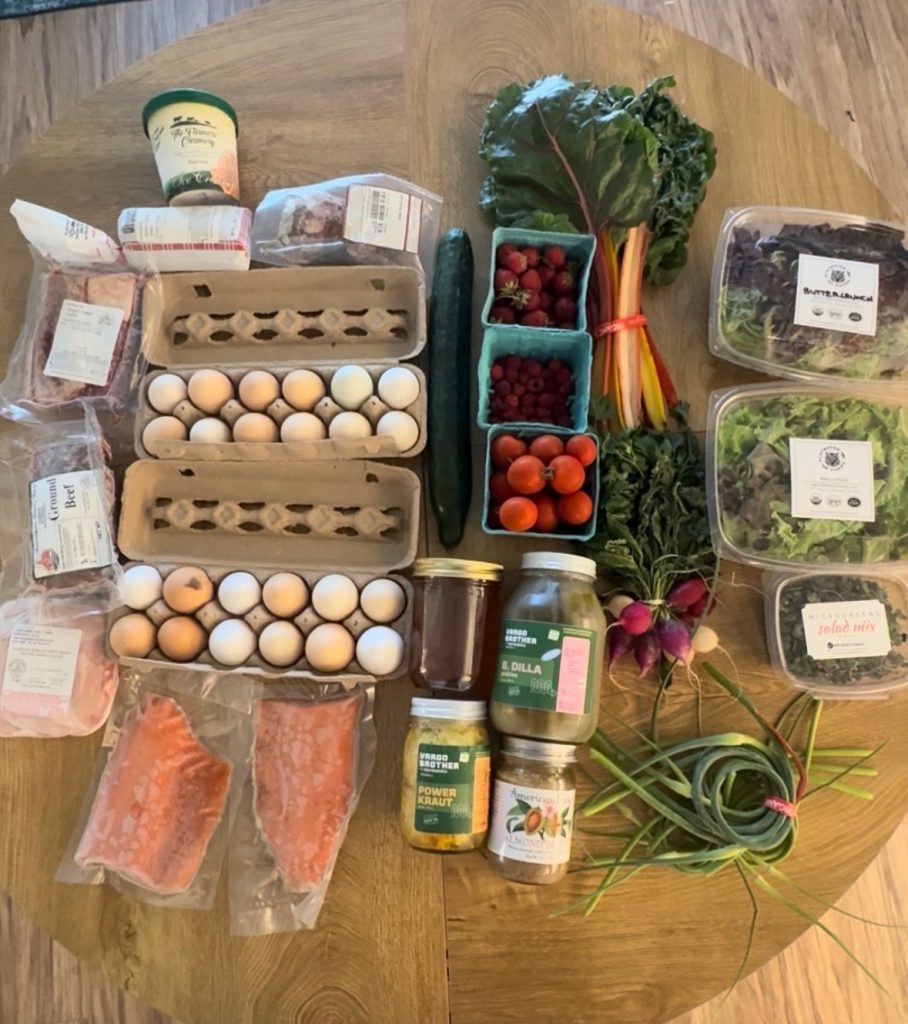
The expansion is aimed at solving one of the biggest barriers to buying local food: convenience.
“Local means fresher food. It means being connected to your community. It means higher quality food,” Jorde says. “But what we’re trying to do is make local more practical, more efficient.”
The model is designed to benefit both consumers and producers. By eliminating the costs associated with traditional retail, including large physical stores and multiple intermediaries, Locavana says it can offer competitive pricing while increasing farmer revenue.
“Our farmers make 70 to 85% on every dollar sold,” Jorde says.
That approach is gaining attention in a region where food production and agribusiness already play a major role in the economy. The sector accounts for 4,548 jobs and generates about $1 billion in gross regional product, with projected growth of 16%. Average earnings reach $92,729 per job.
VandenBrink says the platform also gives consumers more visibility into their food.
“As you shop, each item shows the farm that it comes from,” she says. “I was able to see how close my produce and the meat selections, the dairy, the eggs that I chose were to my home.”
“You could honestly do a full grocery run with this,” she says.
Still, there are limitations. Michigan’s seasonal growing cycle means not all products are available locally year-round.
“We want to have everything you would ever want at a grocery store all year round,” Jorde says. “But in Michigan, you can’t get bananas year-round.”
To meet customer expectations, the company supplements its inventory with select non-local items, while prioritizing local sourcing whenever possible.
Another challenge is certification. Many small farms use organic practices but lack the resources to obtain official organic labels.
“A lot of our smaller local farms don’t use glyphosate. They just don’t have the certification,” Jorde says.
To address that, Locavana highlights “chemical-free” products, offering customers more transparency about how their food is grown.
“It’s not just supporting those largest producers, it’s helping some of the smaller farms,” VandenBrink says.
Becoming more accessible
The company is also testing new ways to expand access, reduce delivery costs, and improve convenience, including refrigerated locker systems in urban areas and mobile, pop-up markets at workplaces.
In Chicago, Locavana developed an option that allows employees to pick up groceries before leaving the workplace.
“This came from a few offices in Chicago that reached out to us,” Jorde says. “They said, ‘Could we do something on-site where people could just get their groceries before they go home?’”
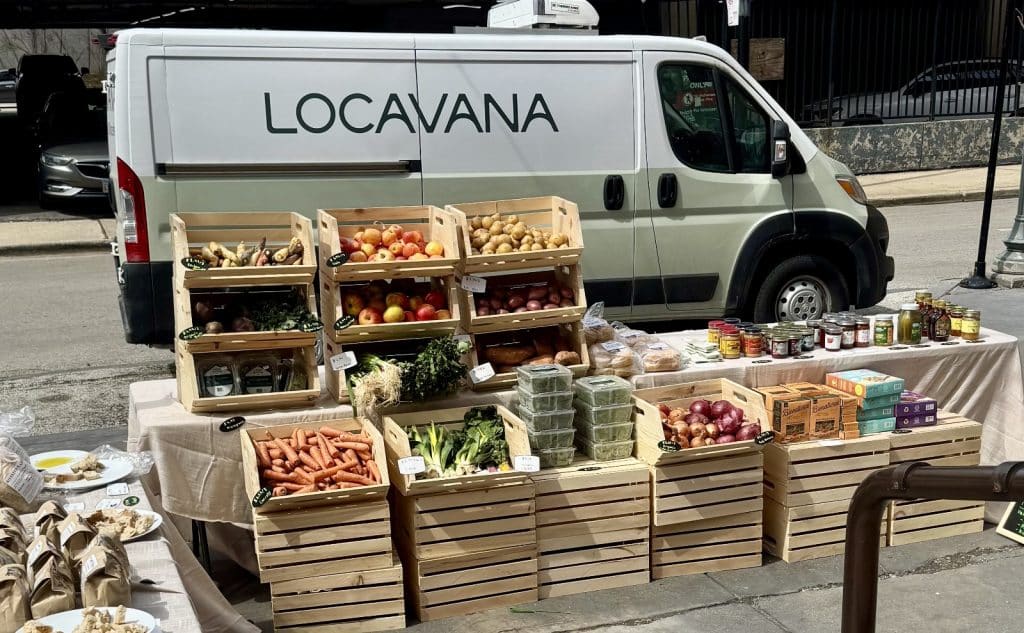
In response, the company is piloting mobile, pop-up grocery setups and refrigerated locker systems in office buildings, where customers receive a code to access their orders. The approach is designed to reduce delivery time and costs while increasing convenience in dense urban areas.
Locavana has grown to more than 1,000 customers within its first year, according to Jorde, and continues to expand its reach across the Midwest.
VandenBrink says efforts like this are part of a broader push to support key regional industries.
“We would welcome any startups that are focusing on industry clusters that are reflective of our region,” she says.
Jorde says the goal is not just to build a business, but to rethink how people access food, especially in a region where agriculture is already a defining part of the economy.
“We’re trying to make local not just a novelty,” he says, “but a new way of getting food.”
Photos courtesy of Locavana
Author

Related Articles

Three lessons small businesses should know about today’s digital world
In her Shore Story, Ravenna resident and business consultant Brittany Meyers shares lessons about websites, technology, and systems that help businesses stay competitive.
She left Muskegon for a global career. Now she’s back to lead the family business
Talia Tyler returns to Muskegon to help lead Tyler Sales Co., her family’s fourth-generation beer distributorship, after building experience with Anheuser-Busch.

Lakeshore Advantage adds board members, outlines regional growth strategies
Economic development group highlights expansion projects, startup support, and workforce initiatives while appointing four leaders to guide regional growth.