TEAM Be Better; expands mental health support with new Holland office
A Holland nonprofit opens a new space to help families navigate mental health care through free, coordinated consultations and advocacy.
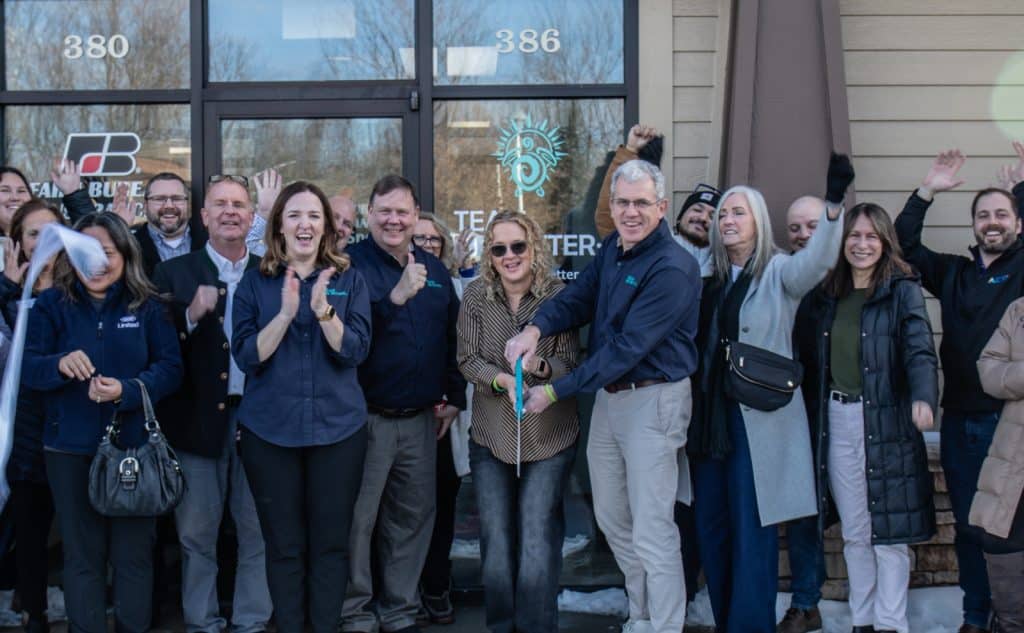
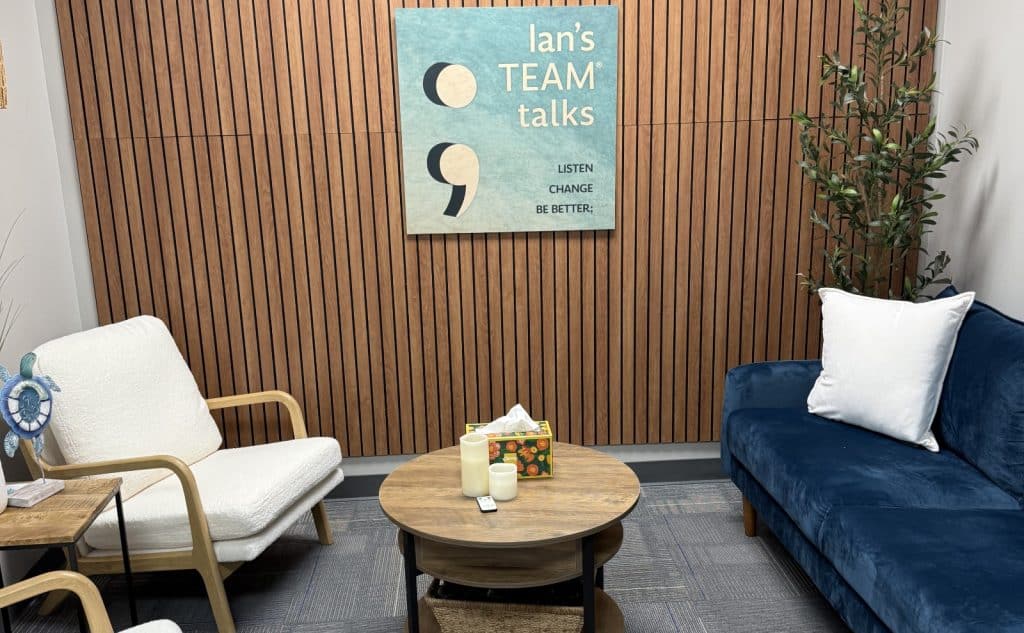
The new home of TEAM Be Better; is filled with aqua hues, natural light, and images of turtles. The combination creates a theme of healing and a tribute to a young man whose life continues to mold its mission.
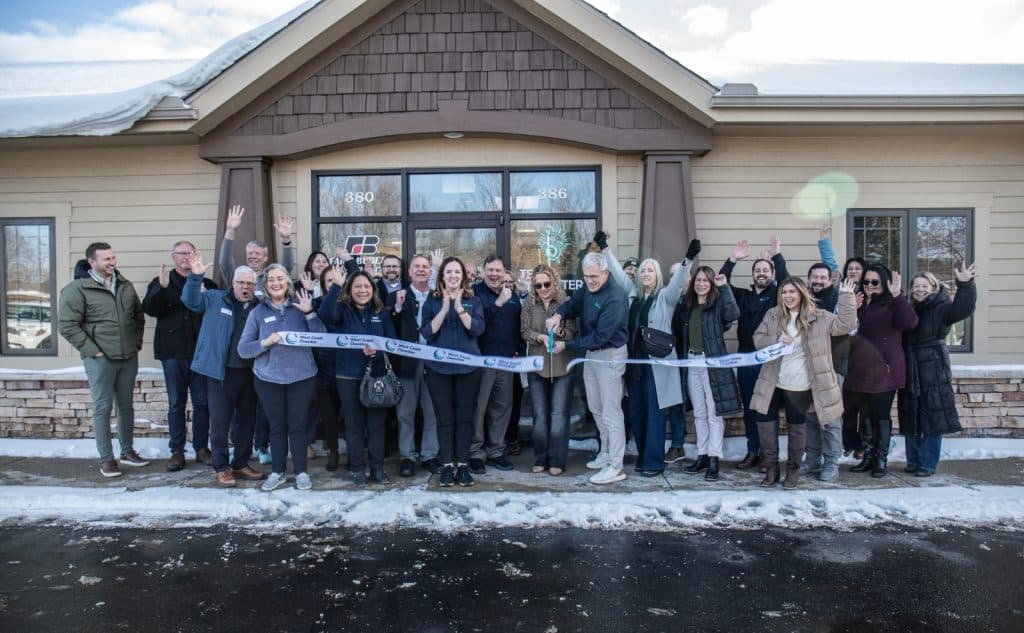
The new location, at 386 Garden Ave. in Holland, opened Feb. 3.
The space was designed to reflect the life of Ian Miskelley, whose love for the ocean and turtles is visible throughout the building.
The turtle logo that appears on walls and materials throughout the office is based on a tattoo worn by Ian’s parents, Steve and Jill Miskelley, as well as his sister Chelsea and brother-in-law Jeremiah (as well as a few aunts, uncles, and cousins). The design began as a family tribute and later became the symbol of the nonprofit created in Ian’s memory.
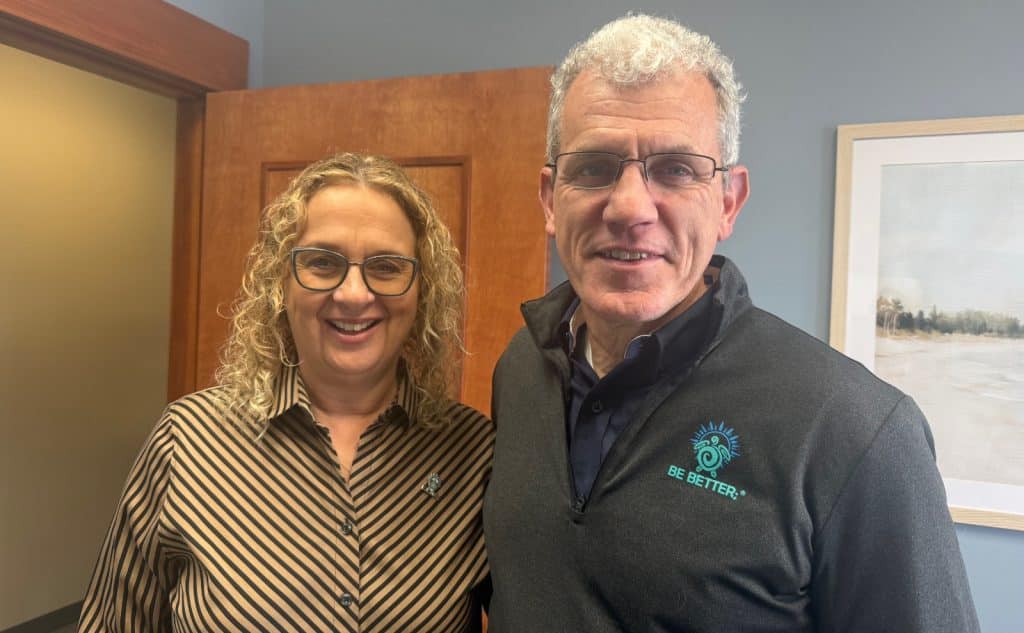
The organization started five years ago after Ian, a University of Michigan swimmer, died by suicide following a struggle with mental illness.
The family’s navigation of grief led them to start an organization to help other students and families in similar situations.
“Ian loved turtles. He wanted to be a marine biologist,” Steve Miskelley says. “When people walk into this space, they’re stepping into something that reflects who he was.”
Coordinating care
TEAM Be Better; primarily serves student-athletes and families who often struggle to find coordinated care.
“We realized how hard it was to understand what to do next,” Jill Miskelley says. “There were professionals involved, but no one who helped connect everything.”
Rather than offering therapy, TEAM Be Better; provides free consultations, advocacy, referrals, and personalized care plans. The goal is to help families understand their options and move forward with confidence, without the pressure of insurance requirements or fees.
The mission is based on a framework Steve Miskelley calls “Ian’s TEAM,” short for triage, educate, advocate, and manage.
Those who come are given an in-depth consultation. This lets families explain their situation once and receive guidance early in the process. This is the triage stage.
“Families usually come to us when things feel overwhelming,” Miskelley says. “They want clear information and a plan.”
TEAM Be Better; then helps families understand diagnoses, treatment options, and the difference between mental illness and mental health challenges tied to life changes. The organization also advocates for clients, assisting with communication involving schools, athletic programs, and medical providers. Ongoing support helps families stay connected to resources after referrals are made.
Michael Brashears, a licensed clinician who is an integral part of TEAM Be Better;, says the model addresses gaps that often leave families without direction.
“Many people bounce between providers without a clear sense of where they’re going,” Brashears says. “This approach brings focus and structure.”
Helping hundreds
Since its founding, the nonprofit has helped almost 400 families in West Michigan. Many are connected to youth, high school, and collegiate athletics, where performance demands and transitions can intensify mental health concerns.
“Student-athletes face unique pressures,” Brashears says. “Their identity is often tied to performance, which can make asking for help harder.”
The organization’s reach has expanded largely through referrals from families who have used its services. Calls now come from outside the region, reflecting a broader demand for guidance-based mental health support.
The nonprofit previously operated out of a single shared room, limiting the number of consultations that could take place at one time.
The new Garden Avenue office includes consultation rooms and flexible gathering spaces that enable multiple clients to be seen at one time.
“We wanted people to feel comfortable as soon as they walk in,” says Jill Miskelley, who took charge of the interior design.
The Miskelleys say the new location is an important milestone as they continue to grow the nonprofit.
“This work is how we carry Ian’s legacy forward,” Steve Miskelley says. “Helping families find their way through difficult moments is what drives everything we do.”
Photos provided by TEAM Be Better; and Shandra Martinez
Author

Related Articles
When everyone is welcome: How Michigan’s CCBHCs are changing care
CCBHCs have been improving access to quality mental health care for Michigan residents since 2021.

Health center trains local residents as dental assistants to fill workforce gaps
HealthLinc, a federally qualified health center covers training costs while preparing local residents for dental assistant jobs, strengthening workforce pipelines and expanding access to care.
Foundation awards $164,000 to expand community mental health access
Grants support nonprofits using culturally responsive, trauma-informed, and creative programs to reduce barriers and strengthen mental health services across Ottawa County.