Wife of veteran with Alzheimer’s finds strength through support from Disability Network
As her husband’s Alzheimer’s progresses, Karen Bass turns to Disability Network West Michigan for vital guidance, community support, and lifesaving caregiver resources.
Karen Bass has spent more than two decades navigating the slow, unpredictable progression of her husband’s Alzheimer’s disease. It’s been a journey marked by fear, frustration, and moments of deep uncertainty.
Fortunately, she hasn’t been alone. She credits the steady support of Disability Network West Michigan for helping her manage the challenges of caring for her husband, L.C., an Air Force veteran who worked as a supply sergeant in Germany during his four years of service.
Karen, 79, remembers the first signs that something was wrong.
“I saw it in 2001,” she says. “His memory became a little less. Things got misplaced. Things I had told him, he didn’t remember.”
Her husband, 84, had always been a “joker,” she says, and she suspects he used humor to mask the cognitive changes.
Their primary doctor initially dismissed her concerns.
“He didn’t believe me,” she says. “He gave him a little test in the office, and he passed. Twice.”
But at home, the shifts were unmistakable.
“He became very agitated, and that wasn’t like him at all,” she says.
Life-threatening episode
Eventually, a neurologist confirmed the diagnosis after a three-hour evaluation. The first major life change came shortly after: L.C. was no longer allowed to drive.
“He was so upset,” Karen says. “Driving was everything to him. Taking his keys was the hardest thing.”
The disease progressed slowly at first, then more sharply. In recent years, Karen says, “He’s been declining. He gets agitated. Sometimes more violent. I’ve learned to walk away and come back in a little while, because he will forget.”
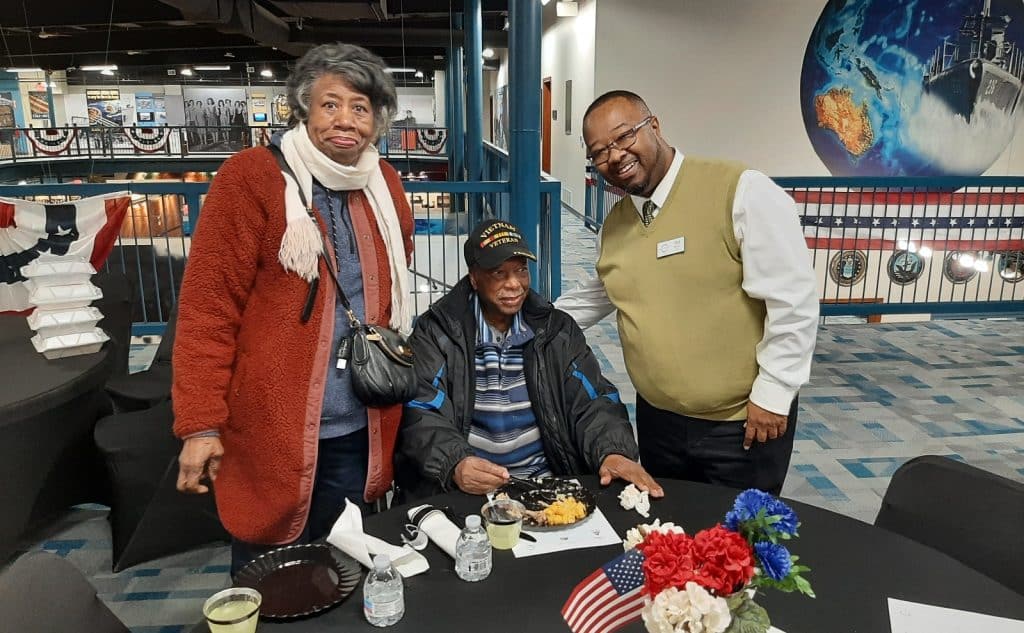
One of the most frightening moments came at a veterans’ appreciation dinner hosted by Disability Network. Karen dropped L.C. off at the entrance and parked the car. When she returned, he was gone.
“I looked everywhere,” she says. “Upstairs, downstairs, outside the building. My panic was getting big.”
She and a friend walked the grounds, even checking near the water. Finally, she climbed a steep hill, an impossible climb for someone who struggles to make it to the mailbox,” she said, speaking of L.C.
“And there he was, sitting up there in the dark,” she says. “I couldn’t believe he walked up the hill.”
Staff and volunteers, alerted by DNWM CEO Will Wilson, rushed to help.
“They got him up and into a wheelchair,” she says. “And he was just chatting like nothing had happened. Like I hadn’t been looking for him all that time.”
What troubles her most is knowing L.C. likely didn’t understand where he was.
“He wasn’t familiar with that building,” she says. “He probably didn’t want to go in by himself. But I didn’t pick up on it until later.”
Plenty of days unfold in similar ways. Each morning she checks his blood sugar and gives him medication. Each morning he asks the same question: “What am I going to do?” And each morning she answers again.
“Every day,” she says. “Every day it does not skip.”
Navigating tough topics
Amid these challenges, Disability Network West Michigan has become one of the most consistent supports in the Basses’ lives.
Years ago, L.C. attended a workshop there, and the couple has been going “every second Wednesday” ever since. She consistently attends sessions that increase her knowledge about veterans’ benefits, medical care, and safety.
“They have different speakers,” Karen says. “Medicare, diabetes, funerals, CPR. They even have lawyers present.”
The sessions, she explains, offer both information and a sense of community, and she applies what she learns to her situation, from understanding CPR constraints to asking more informed questions during medical visits.
For caregivers of veterans, some of the most valuable workshops have involved end-of-life planning and benefits navigation.
“One lady from the mortuary was telling us about the options veterans have,” Karen says. “Some things we didn’t know about. They can expedite things, tell you about things we never knew.”
Learning about veteran cemeteries was eye-opening for her. She’d seen the military precision of Arlington National Cemetery on television and admired the dignity.
“That thing looks so manicured and good, doesn’t it?” she says.
The couple also attended a CPR training, which Karen describes as both difficult and empowering.
“I didn’t realize it was so hard to compress someone’s chest,” she says. “It’s intense. I’m hoping I don’t have to do it, but if I do, I hope I can remember how.”
She appreciates how instructors invite questions and stay afterward to make sure participants understand.
“It was very helpful,” she says.
Steady support
The program’s strength, Karen believes, comes from how closely its staffers listen. Each year they ask participants what information they want next.
“She tries to form her list and secure people to handle it,” Karen says of a Disability Network staffer. “Every month it’s different things.”
Karen says she is grateful for the kindness of Wilson, the Disability Network CEO. His presence during the disorienting moment when L.C. disappeared left a deep impression.
“One of the girls must have told Will that Karen can’t find him,” she says.
Wilson immediately joined the search. After Karen discovered L.C. on the hill, Wilson helped bring him down safely and stayed with him.
“They held his arm until he got down the hill,” she says. “He knew who they were. He was just talking away.”
Karen describes the support from Wilson and the other staff as more than help in a crisis in that moment. It was a reminder that she and her husband are not navigating Alzheimer’s alone. From Wilson’s perspective, that sense of connection is mutual.
“Getting to know L.C. and Karen over the years, they have become like family. Being a veteran myself, I understand the value of service to my country, and although Karen is not a veteran, she understands service daily in her caring for her spouse,” says Wilson, who served in the U.S. Air Force from 1998 to 2002. “DNWM serves to advocate for and empower our veterans and their families. We remind them we are all a team.”
Preparing for the future
Alzheimer’s places immense physical and emotional strain on family caregivers, especially spouses managing the disease at home.
The program can’t stop the progression of Alzheimer’s or eliminate the daily challenges. Karen still navigates repeated questions, agitation, and safety concerns. But she feels less alone, and the information she receives helps her plan for what lies ahead.
Karen and L.C. have been married since 1965. They’ve faced wars, relocations, raising three children, and the long years of retirement together. Alzheimer’s, she says, is a challenge unlike any other, unpredictable, exhausting, and often heartbreaking.
“You cannot understand how a dementia patient’s brain works,” she says. “But so far, it’s been really good to have the support we do.”
The multi-regional Disability Inclusion series is made possible through a partnership with Centers for Independent Living organizations across West Michigan.
Related Articles
Foundation awards $164,000 to expand community mental health access
Grants support nonprofits using culturally responsive, trauma-informed, and creative programs to reduce barriers and strengthen mental health services across Ottawa County.
Local networks, real results: Success stories from Michigan’s CMHs
Michigan’s community mental health agencies serve as lifelines and innovators.
Partner Partner Content Conference creates welcoming space where autism community connects with wide range of resources
The Autism Alliance of Michigan hosts the 2025 Navigating Autism Today (NAT) Conference in Grand Rapids on Friday, November 14.