44-year career earns mediator first West Michigan Peace Builder award
Kevin Bowling to receive West Michigan Peace Builder Award from Mediation Services at April 9 dinner honoring his 44-year career promoting mediation.
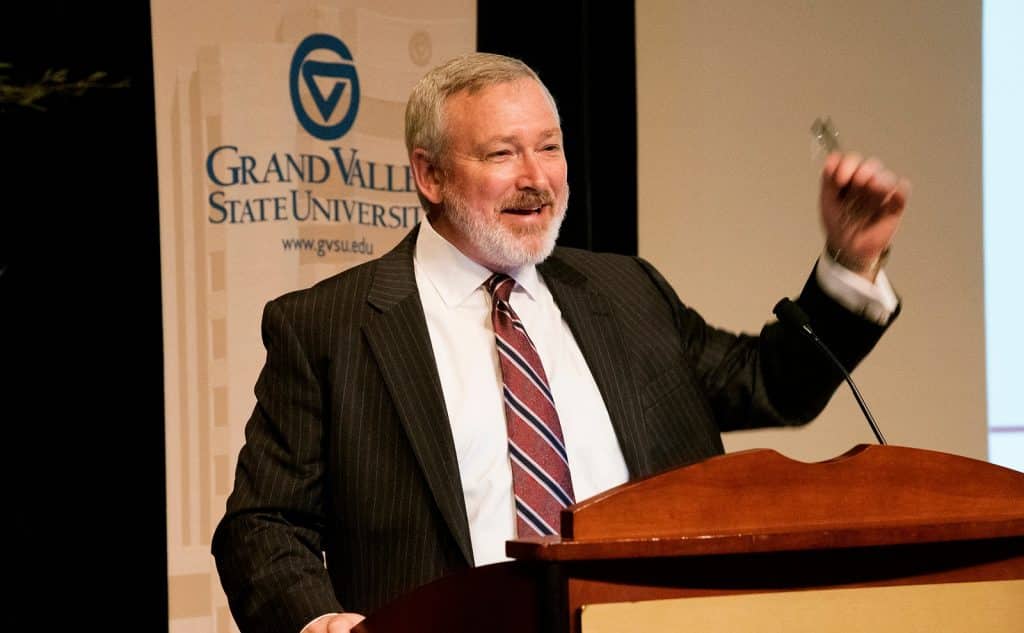
After 44 years working to make courts more fair and accessible, Kevin Bowling says lasting change in the justice system comes from focusing on people, not just process.
Bowling will be honored for his life’s work as the first West Michigan Peace Builder at an April 9 dinner hosted by Mediation Services, an event that also supports efforts to expand conflict resolution outside the courtroom.
“Conflict is part of being human, but so is the capacity for understanding,” says Bowling. “Every time two people choose conversation over confrontation, they strengthen freedom for all of us. Mediation is simply the structure that lets compassion and accountability work together—and that’s what keeps our communities whole.”
During his career in the Ottawa County court system, Bowling says, he worked to strengthen trust by promoting equity, integrity, and access to justice. He later served the Michigan Supreme Court as a state judicial educator and regional court administrator, where he contributed to statewide improvements, including work with the Justice for All Commission.
His work also reached internationally through the Nigeria Justice Sector Assistance Project, and he now serves as chief administrative officer of the International Association for Court Administration. Most recently, Bowling says, he joined court leaders from 53 countries in Singapore to examine how artificial intelligence is shaping the future of the judiciary.
Mediation Services says the April 9 event highlights solutions that help people resolve disputes collaboratively, often reducing cost and conflict while strengthening relationships. The dinner will be held at Bay Pointe Inn along Gun Lake. Proceeds support Mediation Services’ programs.
The Lakeshore caught up with Bowling to learn more about his work and the mission that has inspired him.
The Lakeshore: You’ve dedicated more than 40 years to the court system and helping people resolve conflicts. How did your career begin, and what first inspired you to pursue work in the justice system and conflict resolution?
Kevin Bowling: Unlike many in the legal profession, I began my “legal career” on the other side of the system — as a juvenile delinquent. I had a strong need to belong and to prove myself, which too often led to trouble. Eventually, a juvenile judge took the time to intervene. He told me plainly: I could keep going down that road — likely ending up in prison or worse — or I could find a more positive outlet for my energy and leadership.
Fortunately, I discovered that new path through Scouting. With guidance from scout leaders who became lifelong mentors, I earned the rank of Eagle Scout. Scouting taught me teamwork, communication, and the value of collaboration — all essential mediation skills, though we didn’t call them that at the time. I learned that conflict is normal, but violence isn’t necessary, and the best solutions are usually win-win.
That experience motivated me to focus on my education — first a B.A. in political science, then an M.S. in judicial administration, and finally a J.D. in law. Near the end of law school, I completed mediation training and became certified in civil and domestic relations cases, later adding special education mediation. What began as a judge’s challenge became a lifelong commitment to helping people find constructive ways through conflict.
TL: During your decades with the Ottawa County court system, you worked to strengthen fairness and access to justice. What experiences most shaped your belief in the importance of mediation and peaceful conflict resolution?
KB: As a court administrator in busy trial courts, I had a front-row seat to the everyday human trauma behind case numbers. In Circuit Court, I saw families in deep distress during divorce, custody, and support battles. In Probate Court, I watched extended families struggle with guardianship, mental health, and estate disputes. And in Juvenile Court, I saw young people at crossroads that could determine the course of their lives.
Those experiences convinced me that the court should not always be a battlefield; it can also be a forum for healing and understanding. I worked to strengthen partnerships between Mediation Services and the courts so judges and staff could confidently refer appropriate cases. Each referral offered the parties a chance to shape their own outcome — to be heard, to rebuild, and to move forward. Seeing those successes confirmed my belief that mediation doesn’t just resolve cases; it helps preserve relationships and restores dignity.
TL: Your work has also taken you beyond West Michigan, including supporting judicial improvements in West Africa. What did that international experience teach you about how different communities approach justice and resolving conflict?
KB: After a rewarding 20-year career with the Michigan Supreme Court/State Court Administrative Office, I joined the International Division of the National Center for State Courts and spent a year in West Africa on a USAID-funded Rule of Law project. As deputy chief of party for the Nigeria Rule of Law Assistance Project, I helped train judges and court staff in mediation and other tools to improve access to justice.
Local culture provided powerful lessons. In many communities, recognized elders or respected leaders acted as mediators, emphasizing storytelling and relationship-building as paths to resolution. Their focus was not simply to end a case, but to restore harmony — to ensure the parties could continue living side by side. Working abroad reinforced something universal: people everywhere experience conflict when communication breaks down, and healing begins when conversation resumes. Whether in Michigan or Nigeria, mediation gives people a safe space to talk, listen, and rebuild trust.
TL: You recently spoke in Singapore about artificial intelligence and the future of courts. How do you see emerging technologies like AI shaping the way courts and mediation services operate in the years ahead?
KB: My presentation in Singapore, and several others internationally, grew out of my role as chief administrative officer for the International Association for Court Administration . Technology — including AI — is rapidly transforming courts worldwide. While digital tools have made communication faster, they’ve also weakened many personal connections; social media-driven misunderstandings can quickly escalate into conflict. Around the world, court leaders are now exploring how to harness technology for good—to enhance, not replace, human judgment and empathy.
In mediation, technology can be a tremendous equalizer. Virtual mediation expands access for people who can’t travel. Real-time translation allows participants who speak different languages to fully engage. Some AI tools can scan emails or text messages in family disputes and suggest calmer, less inflammatory phrasing—preventing new conflicts before they start.
And as training methods evolve, AI can supplement rather than substitute for human wisdom, improving how future mediators learn. Used wisely, these tools can make mediation even more inclusive and effective — always with the human heart at the center.
TL: You’re being honored as the first West Michigan Peace Builder by Mediation Services. What does this recognition mean to you, and why is the work of mediation so important for building stronger communities?
KB: Being named the first recipient of the West Michigan Peace Builder Award is deeply humbling. It recognizes not only my work but the shared commitment of countless colleagues, friends, and community partners who believe in the power of dialogue.
Mediation is never a solo act — it’s always a community effort. I hope the award shines a brighter light on Mediation Services and encourages more people to become mediators or to use mediation when conflicts arise. Strong communities are built on strong relationships—within families, neighborhoods, workplaces, and institutions.
Each peaceful conversation, each restored relationship, adds a brick to the foundation of a healthier, more connected community. If this recognition reminds people that listening, empathy, and collaboration are our best tools for peace, then it will have achieved its highest purpose.
Author

Related Articles
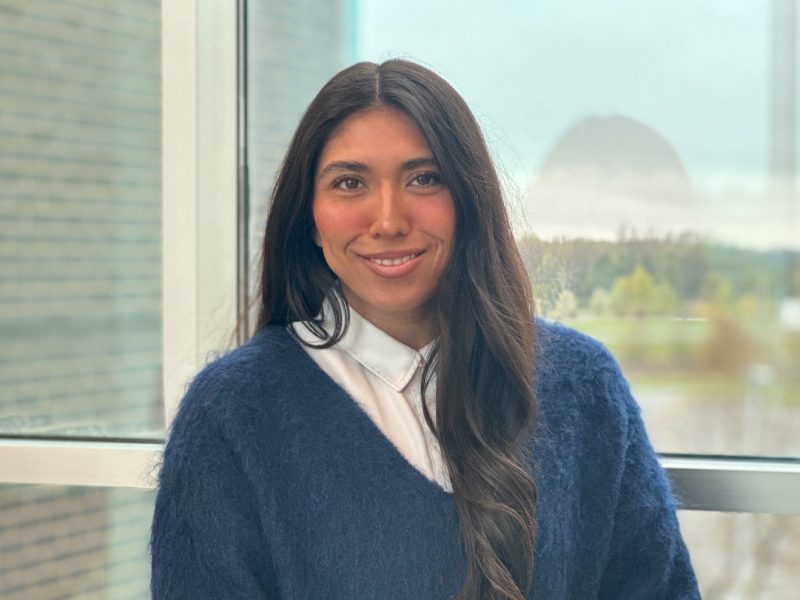
LAUP expands bilingual mental health access for Latino families
New initiative offers free culturally responsive counseling, health worker support, and barrier-free care for Spanish-speaking residents in Holland and Zeeland.
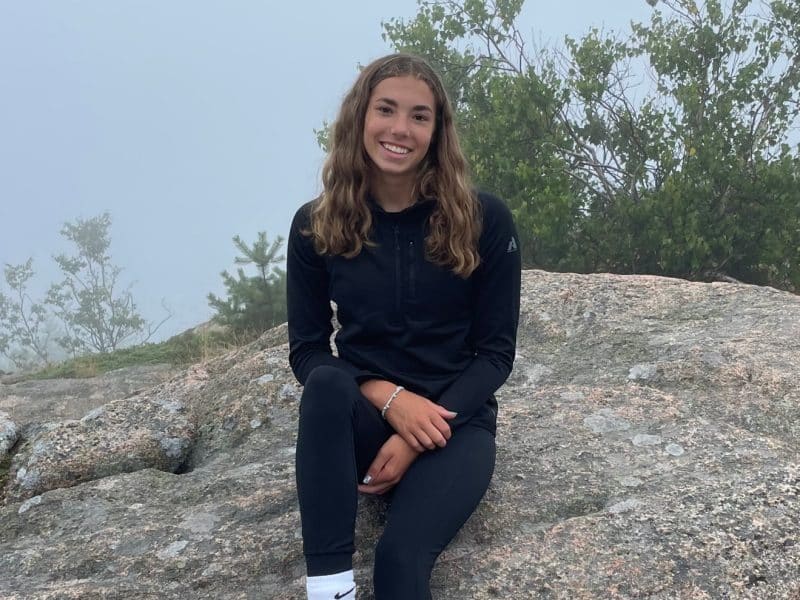
“Grateful for what I can do today”: Teen athlete shares story
In her Shore Story, Muskegon teen athlete Grace Offman writes about living with a rare disease, saying it taught her to be “grateful for what I can do today.”

Health center trains local residents as dental assistants to fill workforce gaps
HealthLinc, a federally qualified health center covers training costs while preparing local residents for dental assistant jobs, strengthening workforce pipelines and expanding access to care.